What You’ll Learn:
- The importance of search credibility management and its impact on brand perception, audience perception, and customer trust.
- How proactive monitoring and engagement with online reviews, review sites, social media channels, and social media conversations can prevent crises and boost business growth.
- Practical steps and strategies to build and maintain a strong, positive online presence that attracts customers and enhances brand credibility and consistency.
Imagine your potential customers typing your brand name into Google Search and finding nothing but negative reviews and unfavorable press across multiple digital platforms. What do you think that does to your business? Studies show that 84% of consumers trust online reviews as much as a personal recommendation. With that in mind, professional business reputation management services have become essential for brands today, particularly for local businesses aiming to enhance search credibility, improve local SEO, and strengthen their overall digital marketing efforts.
Understanding Search Credibility Management
Search credibility management refers to the proactive approach brands take to monitor and influence their online brand reputation across search engines, review sites, social media platforms, and news outlets. When customers search for your brand, the search results significantly impact their perception and purchasing decisions. Therefore, maintaining a positive online reputation is no longer optional; it’s a necessity for enhancing brand consistency and public perception through effective online reputation management.
Search credibility management combines monitoring, content creation, and strategic actions to improve search engine results over time. This includes managing online reviews, generating reviews, and addressing negative comments to maintain a favorable image. The practice of SERM often employs “Push Down” or “Reverse SEO” strategies to promote new, high-quality content and suppress negative results, which is crucial for protecting brand credibility. Integrating online reputation management tools into these efforts ensures a comprehensive approach to safeguarding your brand’s image.

Key Features of Search Credibility Management
Effective search credibility management relies on several key features that help brands maintain and improve their online presence. These include real-time monitoring of brand mentions, review management tools, social listening capabilities, and AI-powered analytics. Incorporating these features allows businesses to collect valuable insights, respond promptly to customer feedback, and strategically enhance their digital footprint. Using an online reputation management tool can simplify these processes and provide real-time alerts to keep your team informed.
The Role of Management Tools in Reputation Management
Utilizing management tools is essential for streamlining reputation management efforts. These online reputation management tools help businesses monitor multiple platforms simultaneously, automate review requests, and provide analytics to measure performance. By leveraging social software for digital brand management, companies can efficiently manage their online reputation and respond to customer feedback promptly, ensuring consistent brand messaging. A reputation management company can also assist in developing strategies tailored to your business needs, including content removal and requesting reviews to strengthen your online presence.
The Cost of Inaction is Greater Than You Think
Ignoring your online reputation can result in a steep price. Let’s quantify what happens when brands neglect online reputation management:
- According to a BrightLocal study, 49% of consumers need to read at least 4 positive reviews before believing a business is trustworthy.
- Negative feedback can lead to a loss of up to 22% of potential customers. For a business generating $1 million annually, that’s a whopping $220,000.
- It can take weeks or even months to recover from a damaged reputation, costing you time that could have been spent on growth and innovation.
- A single negative review on page one can drive away up to 22% of potential customers, while improving a star rating by 1 can increase revenue by 5-9%.
In a world where every interaction is scrutinized, the cost of doing nothing can be devastating. This applies not only to customer-facing brands but also to employer brand reputation, which influences job seekers and talent acquisition. Online reputation management plays a vital role in protecting these aspects of your business.
Note: Prices are just examples and may not reflect actual costs.
Local SEO and Brand Visibility
A strong online reputation directly impacts brand visibility, especially in local SEO. Managing your local business listings and ensuring accurate information across digital platforms helps customers find your business easily. Unlocking the power of local SEO and business listings allows companies to grow fast, as positive reviews and active engagement on local search platforms improve rankings, driving more traffic and potential sales. Online reputation management tools often integrate with local SEO strategies to maximize these benefits.

Employer Brand and Its Impact on Reputation
Your employer brand plays a crucial role in shaping public perception and attracting top talent. A positive employer brand, reinforced through proactive reputation management, builds trust among job seekers and current employees alike. Managing online reviews on employment sites, social media platforms, and social media channels strengthens your company’s image as a desirable workplace. Understanding relevant reputation statistics highlights why people search and employer review monitoring are key components of comprehensive online reputation management.
Why Immediate Action is Crucial
Consider the contrast between brands that proactively manage their online reputation and those that wait:
- Brands that engage with customer feedback on review sites and social media channels can build trust and foster loyalty, while those who ignore it risk becoming obsolete.
- Immediate action can prevent a small issue from escalating into a full-blown crisis, protecting your brand image through effective crisis management.
- By being proactive, businesses can seize opportunities to showcase positive reviews, customer testimonials, and favorable news articles in search engine results.
- Search engines reward businesses that engage positively with customer feedback by improving local SEO and overall search engine optimization, leading to higher search rankings.
The window for proactive reputation management is narrowing. The longer you wait, the more challenging it becomes to repair any damage.
Digital Marketing and Reputation Management
Search credibility management is an integral part of digital marketing strategies. It complements SEO, content marketing, and social media marketing by ensuring that the brand’s online presence is positive and consistent across all digital channels. Effectively integrating online reputation management into digital marketing efforts amplifies key benefits, such as increased brand awareness, customer engagement, and lead generation. By aligning reputation management with broader digital marketing initiatives, businesses can create a cohesive brand narrative that resonates with their target audience. Online reputation management tools enable businesses to collect data, analyze feedback, and coordinate efforts across multiple team members to optimize their strategies.

Customer Feedback and Customer Experience
Collecting and analyzing customer feedback is essential for improving customer experience and maintaining a positive reputation. Using management tools to monitor reviews and social media conversations provides valuable insights that help businesses address concerns promptly and enhance service quality. Prioritizing customer experience fosters loyalty and strengthens brand credibility. An effective online reputation management tool supports analyzing feedback and streamlining response workflows.
Addressing Negative Feedback Effectively
Negative feedback, while challenging, presents an opportunity for brands to demonstrate their commitment to customer satisfaction. Proactively responding to negative feedback on review sites and social media sites shows transparency and a willingness to improve. Employing proven strategies to increase online reviews and boost customer feedback helps businesses balance the narrative by acknowledging issues, offering solutions, and requesting the removal of content when it contains false or harmful information. Handling negative feedback professionally can mitigate damage, turn dissatisfied customers into advocates, and positively influence public perception. Content removal services within online reputation management can be instrumental in addressing harmful or misleading information.
Utilizing Google Alerts and AI Search for Monitoring
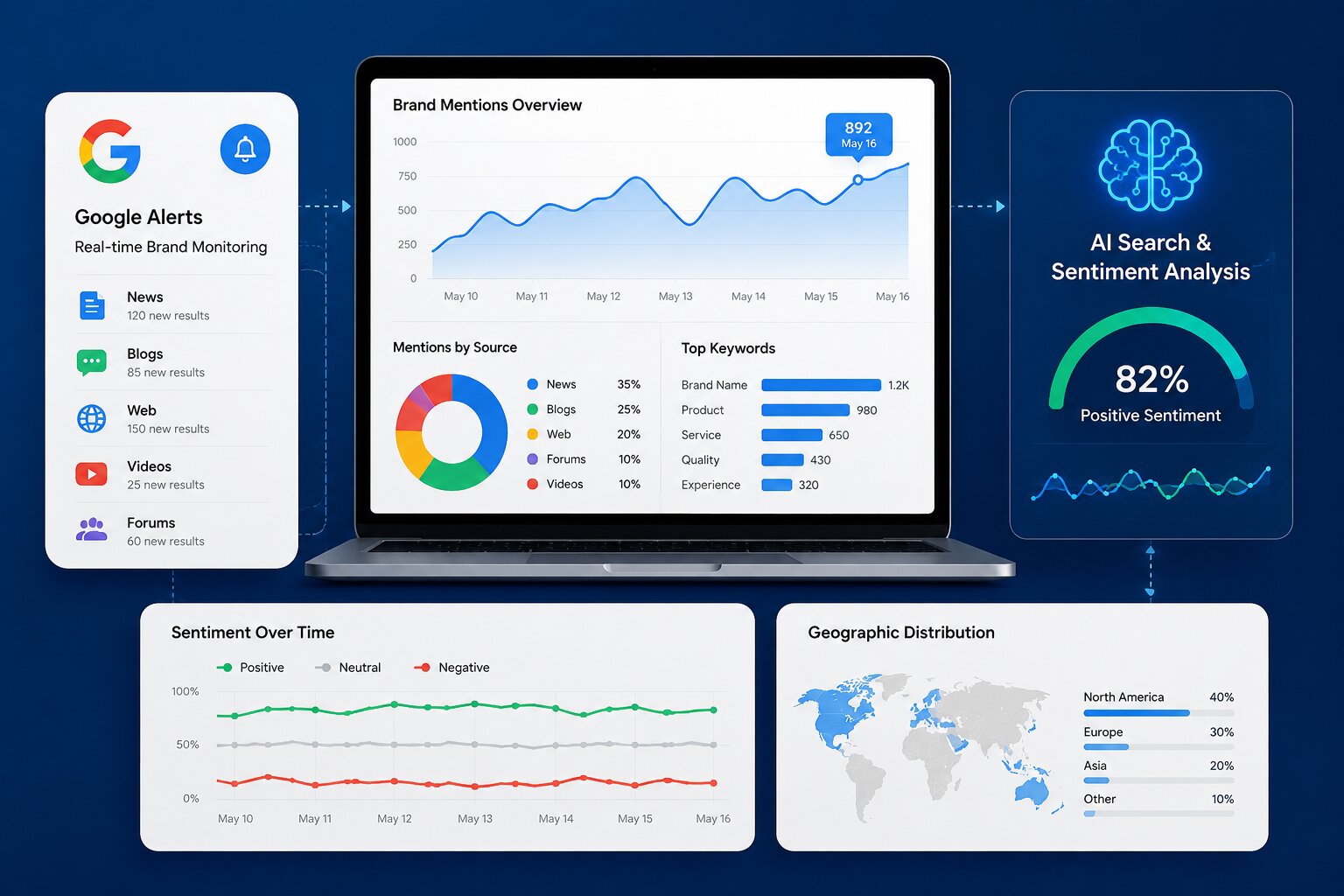
Tools like Google Alerts are invaluable for real-time monitoring of brand mentions across the web. Combined with AI search technologies, businesses can efficiently gather data and gain actionable insights to stay ahead of reputation issues. Understanding why reputation management is important for your business highlights how AI search capabilities enhance sentiment analysis, enabling proactive strategies. These tools help collect data and provide real-time alerts to notify teams of important mentions.
What Happens After You Take Action?
Once you decide to engage in search credibility management, the process becomes straightforward:
- You’ll start monitoring online mentions, brand mentions, and social media conversations across various digital platforms, ensuring you’re aware of customer sentiment and public perception.
- By using tools to manage customer reviews, you can respond quickly to both positive and negative feedback, enhancing the customer experience and customer relationships.
- As you build a strong online reputation, you’ll notice an uptick in brand visibility, brand credibility, and customer trust, leading to increased sales and better positioning in local SEO and search engine optimization.
This is a journey, not a sprint. Taking that first step is crucial, and it doesn’t have to be overwhelming.
Building Momentum for a Strong Online Reputation
Consider implementing these actionable steps to enhance your search credibility management:
- Set up Google Alerts and social listening tools for your brand, company’s products, and key competitors. This will ensure you are always informed and able to identify trends early.
- Engage with customers on social media channels and review platforms. Responding to feedback shows that you value customer relationships and improves your employer brand and public perception.
- Utilize social listening and media monitoring tools to analyze trends, brand mentions, and sentiment surrounding your brand.
- Encourage existing customers to leave positive reviews on key review sites and review management platforms by proactively requesting them.
- Regularly evaluate your online presence, including news outlets and news articles, and adjust your strategy as needed to maintain brand consistency.
By taking these steps, you are not just reacting to problems; you are shaping your brand’s narrative and strengthening your competitive benchmarking. Employing an online reputation management company can further support these efforts by offering expert guidance and additional resources.
Ready to Take Control of Your Brand’s Reputation?
If you want to safeguard your business from the pitfalls of negative online perception, now is the time to act. Implementing a search credibility management strategy can help you cultivate a positive online presence that attracts customers and builds trust. Don’t wait for a crisis to occur. Start today by exploring our reputation management services at Reputation Prime.
FAQs About Search Credibility Management
Q1: What is search credibility management?
Search credibility management is the process of monitoring and influencing how your brand appears online, particularly in search engine results, review platforms, and social media channels. Its goal is to maintain a trustworthy and positive image that supports long-term business growth and public confidence.
Q2: Why is online reputation important for businesses?
Your online reputation directly affects customer trust, employer branding, and purchasing decisions. A strong and positive reputation can increase sales, attract top talent, and strengthen customer loyalty, while negative perceptions can discourage potential customers and damage business performance.
Q3: How can I improve my brand’s online reputation?
You can improve your online reputation by consistently monitoring brand mentions, engaging with customers on social media and review sites, encouraging satisfied customers to leave feedback, and responding quickly and professionally to negative comments. Maintaining transparency and strong customer communication helps reinforce trust and brand consistency.