What You’ll Learn:
- The critical impact of online reviews and online reputation management on consumer trust and business success.
- Effective strategies for handling negative feedback and encouraging positive online reviews through online reputation management.
- How online reputation management influences search engine rankings, social media presence, and hiring decisions.
Did you know that 93% of consumers read online reviews before making a purchase? That’s not just a number; it’s a wake-up call for brands across every industry. If you’re not paying attention to your online reputation management, you’re leaving money on the table. Let’s explore the reputation statistics that can shape your brand strategy and secure your competitive edge.
The Importance of Online Reviews for Local Businesses
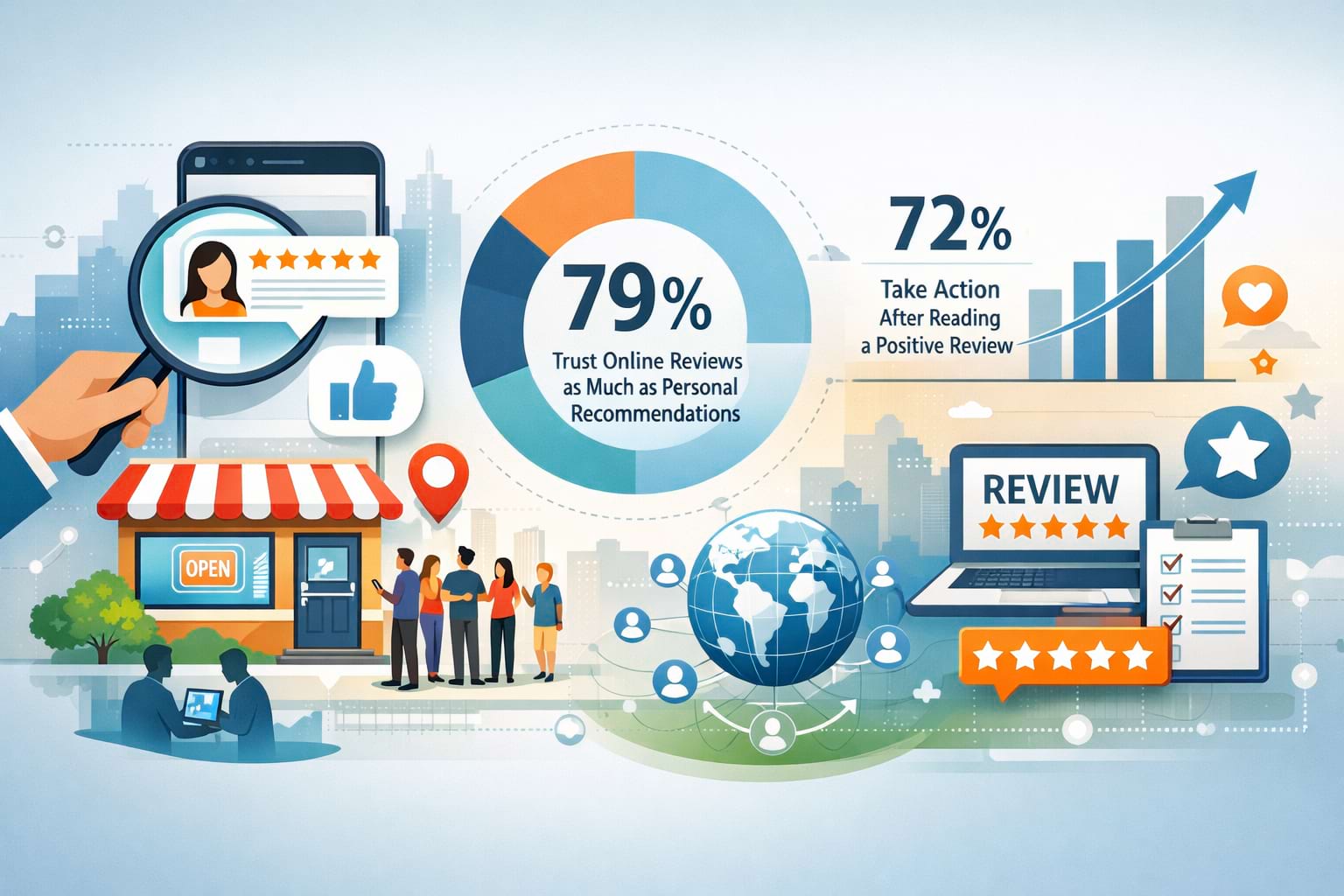
Digital reviews aren’t just nice to have; they’re essential, especially for local businesses. According to BrightLocal, 79% of consumers trust online reviews as much as personal recommendations, and a staggering 72% will take action only after reading a positive review. This reality underscores the critical role of review management in shaping consumer perception and supporting local businesses in competitive markets.
Online Review Statistics and Consumer Trust Based on Personal Recommendations
Understanding online review statistics reveals how deeply reviews influence consumer trust. For instance, 93% of consumers say digital reviews impact their purchasing decisions, making online reputation management a vital component of any reputation strategy. Positive reviews build consumer trust, often serving as digital personal recommendations, while negative content can quickly erode it, affecting both brand perception and revenue. Consumers rely heavily on reading digital reviews to guide their choices and build confidence in a brand. This is especially true for online shoppers who read online reviews before making a purchase, reflecting how business reputation directly influences buying behavior.
The Financial Risks of Ignoring Your Company’s Reputation
Ignoring your company’s reputation and neglecting online reputation management can lead to significant financial repercussions. To understand the broader impact, explore reputation risk in banking. Research shows that businesses can lose up to 22% of potential customers due to negative feedback alone. Let’s quantify that: if your business generates $500,000 annually, that’s a potential loss of $110,000. Can you afford to let that happen? Negative online reviews not only deter customers but also reduce your business growth and overall market value. Effective online reputation management helps mitigate these risks. A poor reputation can damage corporate reputation, resulting in decreased search visibility and rankings and further impacting revenue and growth.
Note: Prices are just examples and may not reflect actual costs.
Consumer Expectations for Brand Engagement and Reputation Score
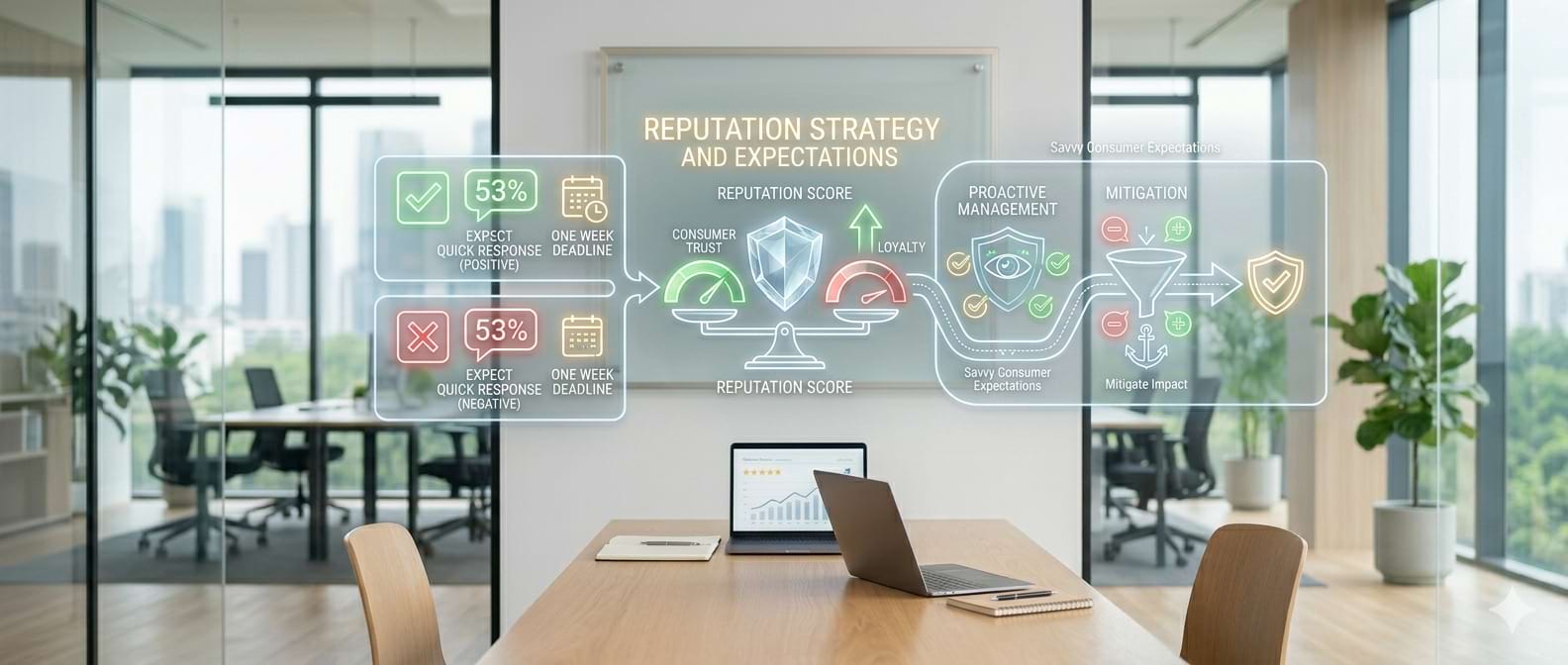
Today’s savvy consumers expect brands to engage with their feedback, both positive and negative. In fact, 53% of consumers expect brands to respond to negative reviews within a week. Failing to meet this expectation can damage your reputation score and lead to lost loyalty. A proactive online reputation management strategy is essential for maintaining consumer trust and improving your company’s reputation. Reputation managers play a crucial role in monitoring and responding to customer feedback, helping businesses maintain a positive reputation and mitigate the impact of negative feedback.
Employer Brand and Attracting Qualified Job Candidates
A company’s reputation extends beyond customers to influence its employer brand. Positive online reviews and a strong digital presence attract qualified job candidates by showcasing a trustworthy and desirable workplace. In today’s competitive job market, maintaining a good reputation through effective online reputation management is crucial for recruiting top talent and retaining employees. Using a reputation scorecard can help measure and improve these efforts. Online reviews influence job seekers’ perceptions and decisions, making review management an essential part of employer branding. Research shows that 86% of job seekers research company reviews before applying, and 68% of professionals won’t apply to companies with poor online feedback. This highlights how corporate reputation affects hiring outcomes and employee retention.
Examples of Effective Reputation Management
Take Starbucks, for instance. After facing backlash from a racial bias incident, they launched a comprehensive training program and actively engaged with consumers on social media. This approach not only repaired their reputation but also strengthened customer loyalty, showcasing how timely responses and engagement through online reputation management can turn a bad situation around.
Another example is Amazon. They constantly monitor reviews and swiftly address negative feedback. This strategy allows them to maintain a high level of consumer trust, reflected in their impressive 4.4-star average rating across millions of products, all supported by diligent online reputation management.
The Role of Social Media in Shaping Reputation
Social media is where public opinion forms and spreads. According to Statista, 54% of social media users research products there. To better understand performance, explore how to measure brand reputation. This statistic emphasizes the need for brands to maintain a strong, positive presence across platforms. If you aren’t engaging on social media, you risk losing visibility and credibility. Social media also plays a significant role in building your employer brand reputation, which is critical for attracting qualified job candidates. Integrating social media efforts with online reputation management enhances overall brand perception. Younger consumers especially rely on social media and online reviews to form opinions about brands, making social engagement a vital part of reputation management statistics.
Search Engines and Search Results as the Gateway to Your Reputation
Search engines are the primary channel through which consumers discover and evaluate brands. Your position in search results directly impacts your reputation score and online visibility. Businesses with higher rankings on Google and other search engines benefit from increased traffic and trust. Optimizing your online presence through online reputation management ensures that positive content about your brand is what consumers find first. Search engine statistics reveal that 75% of users never scroll past the first page of Google search results, making search rankings crucial for reputation visibility. Managing your presence in Google search results is key to controlling your online reputation and attracting customers.
Strategies for Handling Negative Reviews
Negative reviews are inevitable. However, how you respond can make all the difference. Rather than ignoring them, address negative reviews head-on with a solid online reputation management approach. For deeper insight, explore this complete online reviews website guide for businesses. A well-crafted response can turn a dissatisfied customer into a loyal advocate. Start by acknowledging the issue and offering a solution. This transparency builds trust and shows potential customers that you care. Managing reputation also involves combating fake reviews to protect your digital reputation and maintain authenticity, key components of effective online reputation management. Brands that respond promptly to negative reviews are more likely to restore public trust and reduce the impact of a poor reputation.
Strategies to Encourage Customers and Build a Positive Online Reputation
To create a good online reputation, focus on encouraging happy customers and job seekers to leave positive reviews. Studies show that 68% of consumers are more likely to leave a review when asked. Make it easy for them by providing direct links to your review platforms in follow-up emails or receipts. This simple step can dramatically improve your average rating and enhance brand perception. These efforts are integral to a comprehensive online reputation management plan. Businesses with more than 200 reviews can generate twice the revenue of those with fewer, demonstrating the financial benefits of a positive reputation.

Key Elements of Reputation Management
Creating a strong online reputation management strategy involves several key actions:
- Regularly monitor your online presence.
- Engage with customers on review platforms and social media.
- Encourage satisfied customers to share their experiences.
- Develop a process for promptly addressing negative feedback.
Implementing these strategies not only helps manage your reputation but also fosters customer loyalty and improves your reputation score, which can influence your search engine rankings and online visibility. Incorporating white-label online reputation management can streamline these efforts. Since online shoppers regularly read reviews, a strong reputation management approach builds trust and encourages repeat business. Online reputation management is a continuous process that requires dedication and responsiveness. Reputation managers play a vital role in executing these strategies effectively.
Enhancing Your Brand’s Visibility through Positive Reviews
Your online reviews directly impact your search engine visibility. A study by Moz indicates that review signals account for 15% of Google’s ranking algorithm. This means businesses with a higher volume of positive reviews are more likely to appear on the first page of search results. If your competitors are leveraging their reviews effectively through online reputation management, you could be falling behind. This increased search traffic can lead to better business outcomes and higher market value. A positive reputation not only improves search visibility but also boosts conversion rates, enabling businesses to charge a premium for trusted services.

Understanding Different Review Platforms
Each review platform has its unique audience and influence. For instance, Google reviews impact local SEO, while Yelp is critical for restaurant visibility. To better understand platform impact, explore these reputation management statistics. Understanding these nuances allows you to tailor your online reputation management strategy to maximize your online presence and reach potential customers effectively. Review sites are essential tools for consumers who rely on customer feedback to make informed decisions, underscoring the importance of comprehensive online reputation management. Protecting your brand from fake reviews is crucial, as they can distort your reputation and mislead potential customers. Effective management includes identifying and addressing fake reviews to maintain authenticity and trust.
Creating Your Reputation Management Action Plan
Now that we’ve explored the vital statistics, it’s time to take actionable steps toward improving your brand’s reputation. Start by evaluating your current standing. What do your reviews say? Are there common themes in the feedback? Address these points and create a proactive online reputation management plan to engage with your consumers.
If you’re unsure where to start, consider partnering with a reputation management service specializing in online reputation management. This can streamline the process, allowing you to focus on your core business while experts handle your online reputation and help protect against fake reviews. Taking action today can prevent larger issues tomorrow, reinforcing your brand’s value and ensuring brand consistency across all platforms.
FAQs About Online Reviews & Reputation Management
Q1: Why are online reviews so important for my business?
Online reviews play a major role in shaping consumer trust and purchasing decisions. Most customers read reviews before choosing a business, making them a critical factor in your brand’s credibility, visibility, and overall success.
Q2: How can I encourage more positive reviews?
The best way to generate positive reviews is to ask satisfied customers at the right time—typically shortly after a purchase or service. Make the process simple by sending follow-up emails or messages with direct links to your review platforms, ensuring it’s quick and convenient for customers to respond.
Q3: What should I do if I receive a negative review?
Respond promptly and professionally. Acknowledge the customer’s concerns, show empathy, and offer a solution where possible. Handling negative feedback well demonstrates accountability and builds trust with potential customers who are reading your responses.
Q4: How often should I monitor my online reputation?
Monitoring should be continuous. Regularly check review sites, social media, and brand mentions so you can quickly address issues and stay informed about customer sentiment. Consistent monitoring helps you remain proactive rather than reactive.
Q5: Can I manage my online reputation on my own?
Yes, but it requires time and consistency. Managing reviews, engaging with customers, and maintaining a strong online presence can be demanding. Many businesses choose professional reputation management services to streamline the process and focus on growth.