What You’ll Learn:
- Understand the importance of measuring reputational risk and its impact on your company’s reputation and stakeholder trust.
- Discover effective strategies and tools for monitoring public sentiment, customer feedback, and media perception to identify potential reputational threats.
- Learn how to build a comprehensive reputational risk management framework to minimize negative impact and maintain a strong reputation.
Reputation risk is a critical component of enterprise risk administration, reflecting the potential harm to a company’s public image and stakeholder trust. To address this effectively, explore business reputation management services. Effectively measuring and managing reputation risk enables organizations to anticipate challenges and protect their brand equity. In an age when customer trust can vanish overnight with a single misstep, knowing how to measure reputational liability effectively is crucial. Are you ready to face the fallout from reputational damage? Let’s break it down.
The Hidden Costs of Ignoring Reputational Risk
Ignoring reputational risk can lead to staggering consequences. Companies like United Airlines and Wells Fargo have seen billions wiped off their market value due to reputational damage. According to a PwC study, organizations can lose up to 22% of their market value if they fail to manage their reputations effectively. Think about the lost time, revenue, and customer loyalty. This highlights the essential role of enterprise liability management strategies in protecting your organization’s reputation and ensuring resource allocation supports reputation risk mitigation.

What Reputational Risk Refers To
Reputational risk refers to the potential loss a company faces due to negative public perception. To better manage this, explore these reputational resources and strategies to safeguard your brand reputation. This perception can stem from various factors, including customer complaints, negative media coverage, or even data breaches involving customer data. For instance, a single cybersecurity breach can result in financial losses and significantly damage a company’s credibility and reputation. Understanding reputational risk patterns helps organizations identify potential issues early and implement enterprise risk management approaches to meet stakeholder expectations, including those of loyal customers, new customers, and other stakeholders. Managing reputation risk effectively is essential to safeguard brand value and maintain stakeholder trust. Companies that ignore reputation risk may face long-term consequences that affect their competitive position and market standing. Integrating reputation risk awareness into daily operations ensures that potential threats to the organization’s reputation are identified and addressed proactively.
Common Types of Reputational Risk
Reputational risk manifests in various forms, each posing unique challenges to an organization. Common types include operational failures, legal misconduct, employee misconduct, partner company failures, and failure to uphold environmental accountability. Recognizing these common types enables businesses to tailor their liability management strategies effectively and prioritize areas that require immediate attention. Addressing reputation risk requires a comprehensive approach that considers all possible sources of harm to the organization’s public image. By understanding the different types of reputation risk, companies can better allocate resources and develop targeted mitigation plans to protect their brands and stakeholder relationships, thereby preserving their reputations.
Strategies for Measuring Reputational Risk
Measuring reputational risk involves several strategies that provide actionable insights:
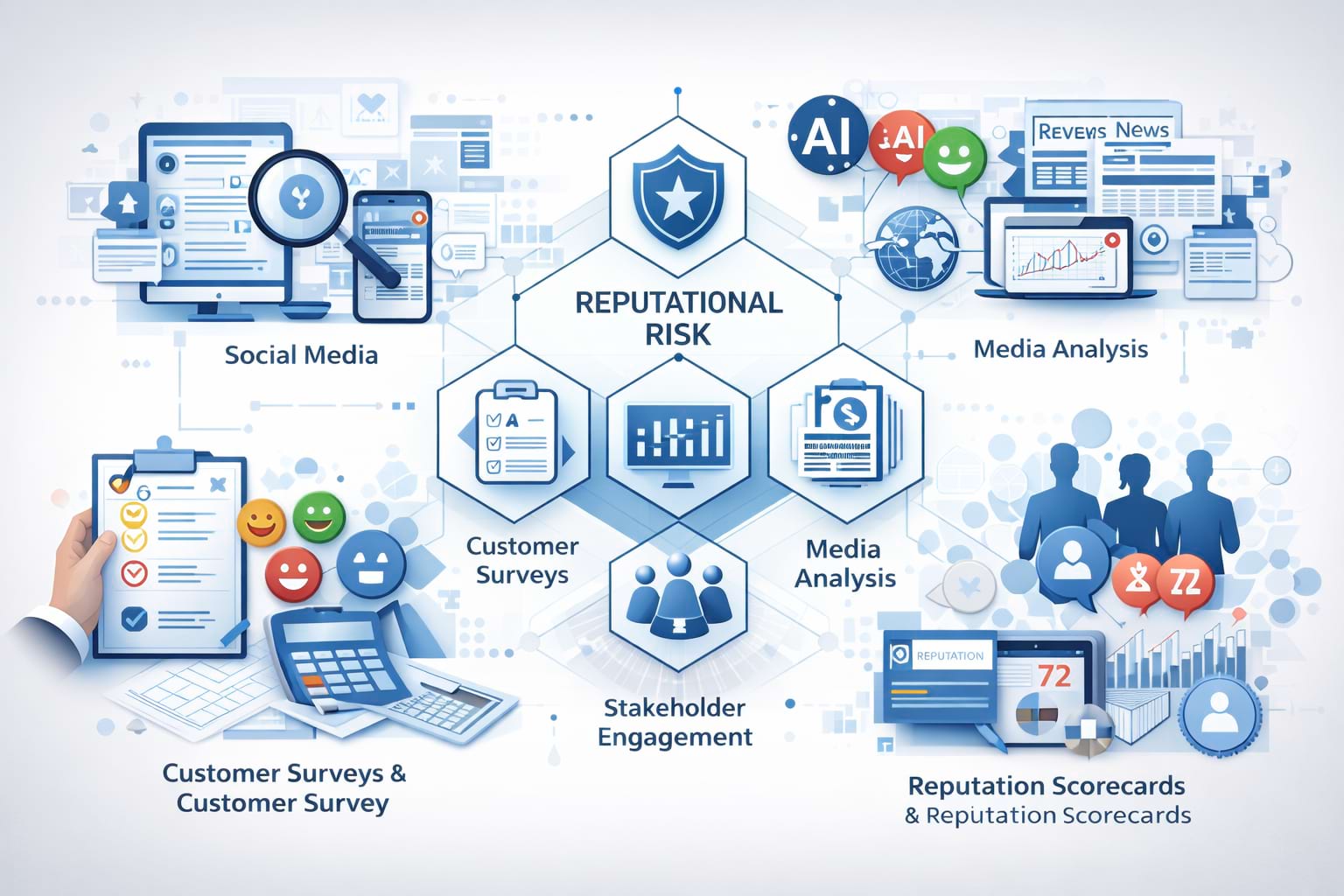
- Social Media Monitoring: Use tools to analyze mentions of your brand across multiple social media platforms. Look for patterns in negative feedback and gauge overall sentiment. Social listening tools provide valuable insights into public opinion and help detect potential damage early.
- Customer Surveys: Regularly solicit customer feedback on their perceptions of your organization. This can help identify potential risks before they escalate and improve customer satisfaction by addressing unique needs.
- Media Analysis: Track media mentions and analyze the tone of these articles. Are they positive, negative, or neutral? Monitoring media volume helps understand how often your organization is mentioned and the impact of severe incidents.
- Stakeholder Engagement: Engage with stakeholders, including employees, customers, and investors, to understand their concerns and expectations. This helps align your risk management strategies with stakeholder expectations and supports better communication.
- Reputation Scorecards and Financial Impact Modeling: Use quantitative tools like reputation scorecards to assign scores to your reputational health, and financial impact modeling to estimate losses after reputational events. These tools help measure reputational risk objectively and track changes over time.
- Internal Audits and Root Cause Analysis: Conduct internal audits to evaluate processes for safety, ethical lapses, and data mishandling, which are often the root cause of reputational damage. Identifying these causes early helps prevent further harm.
- AI-Powered Sentiment Analysis: Leverage AI tools to monitor ongoing risk by analyzing sentiment across social media, news, and other platforms. This proactive approach helps detect issues before they escalate.
Reputational Risk Examples
Real-world incidents provide valuable lessons on the consequences of reputational risk. To better understand how to respond, explore this complete guide to managing brand risks and reputation. For example, Starbucks faced backlash in 2018 after an incident involving racial profiling, leading to nationwide racial bias training and a renewed commitment to social responsibility. Conversely, Equifax’s mishandling of a massive data breach resulted in widespread public outrage and severe financial penalties. These examples underscore the importance of swift, transparent responses to mitigate reputational damage and restore stakeholder trust in the organization’s reputation.
Building a Reputational Risk Management Framework
To minimize reputational risk, develop a comprehensive framework that includes:
- Risk Identification: Regularly assess potential risks from various sources, including social media platforms and customer feedback. Use a combination of qualitative and quantitative methods to gain valuable insights.
- Communication Strategy: Prepare a proactive communication plan to address potential negative publicity quickly. Communicate transparently to maintain trust and meet stakeholder expectations.
- Response Protocol: Create a clear protocol for responding to incidents that could harm your reputation. This includes damage control measures to minimize further damage.
- Board Oversight: Establish board oversight for reputation management to ensure alignment of threat management with broader business objectives and maintain constant communication between threat management teams and the board.
- Third-Party Risk Management: Monitor the actions of partners and third-party vendors, as their failures can pose reputational risks. Ensure your partners uphold ethical standards and quality to protect your brand.
Implementing these steps can significantly reduce the likelihood of reputational damage and protect your organization’s public image.
The Role of Environmental Responsibility in Reputation Risk
Environmental responsibility is increasingly critical in managing reputational risk. To strengthen your approach, explore how to build a good reputation in business. Stakeholders now expect companies to demonstrate sustainable practices and social accountability. Failure to address environmental concerns can lead to public criticism, protests, and loss of trust, making it essential to embed environmental accountability within your risk management framework, especially when handling sensitive customer data.
Overcoming Common Hesitations About Measuring Reputational Risk
Many businesses hesitate to focus on managing reputational risk for several reasons:
- Cost Concerns: Some may think that measuring reputational risk is expensive. However, the cost of inaction is often far higher, especially in severe incidents.
- Vague Definitions: Organizations might feel that perception risk is too unclear to measure. In reality, with the right tools and strategies, it can be quantified effectively through reputation scorecards and financial impact modeling.
- Fear of Bad News: Leaders may worry that measuring perception risk will only uncover bad news. The truth is, understanding weaknesses enables proactive improvements and better risk management strategies.
Moving from Insight to Action with Proactive Communication
Proactive communication is a cornerstone of effective reputational risk management. To better understand this approach, explore proactive vs reactive reputation management. By engaging openly with stakeholders and addressing concerns before they escalate, organizations can build trust and demonstrate accountability. Timely and transparent communication helps mitigate reputational damage and supports long-term relationship building.

Managing Negative Feedback to Protect Your Reputation
Negative feedback, whether from customers, employees, or media, can pose a serious reputational risk if left unaddressed. Establishing processes to monitor, respond to, and learn from negative feedback allows organizations to turn challenges into opportunities for improvement. Prompt and empathetic responses reinforce a company’s commitment to quality and stakeholder satisfaction.
Enterprise Risk Management and Reputational Risk
Integrating reputational risk measurement into your enterprise risk management (ERM) framework is essential for a holistic approach. To support this strategy, explore reputation insurance. ERM enables organizations to identify, assess, and prioritize risks across the business, ensuring reputational threats are managed alongside operational, financial, and strategic risks. This integration facilitates better resource allocation and supports a culture of risk awareness that permeates the organization at all levels.
How to Mitigate Reputational Risk
To mitigate perception risk effectively, companies should adopt a multi-faceted approach. This includes maintaining transparency, actively monitoring social media and other platforms to detect issues early, responding promptly to negative feedback, and embedding social or environmental responsibility into corporate practices. Additionally, fostering strong employee morale and ethical behavior helps prevent incidents that can damage a reputation. Developing and regularly updating a crisis management plan ensures preparedness for significant events that could threaten reputation.
Understanding and Addressing Reputational Damage
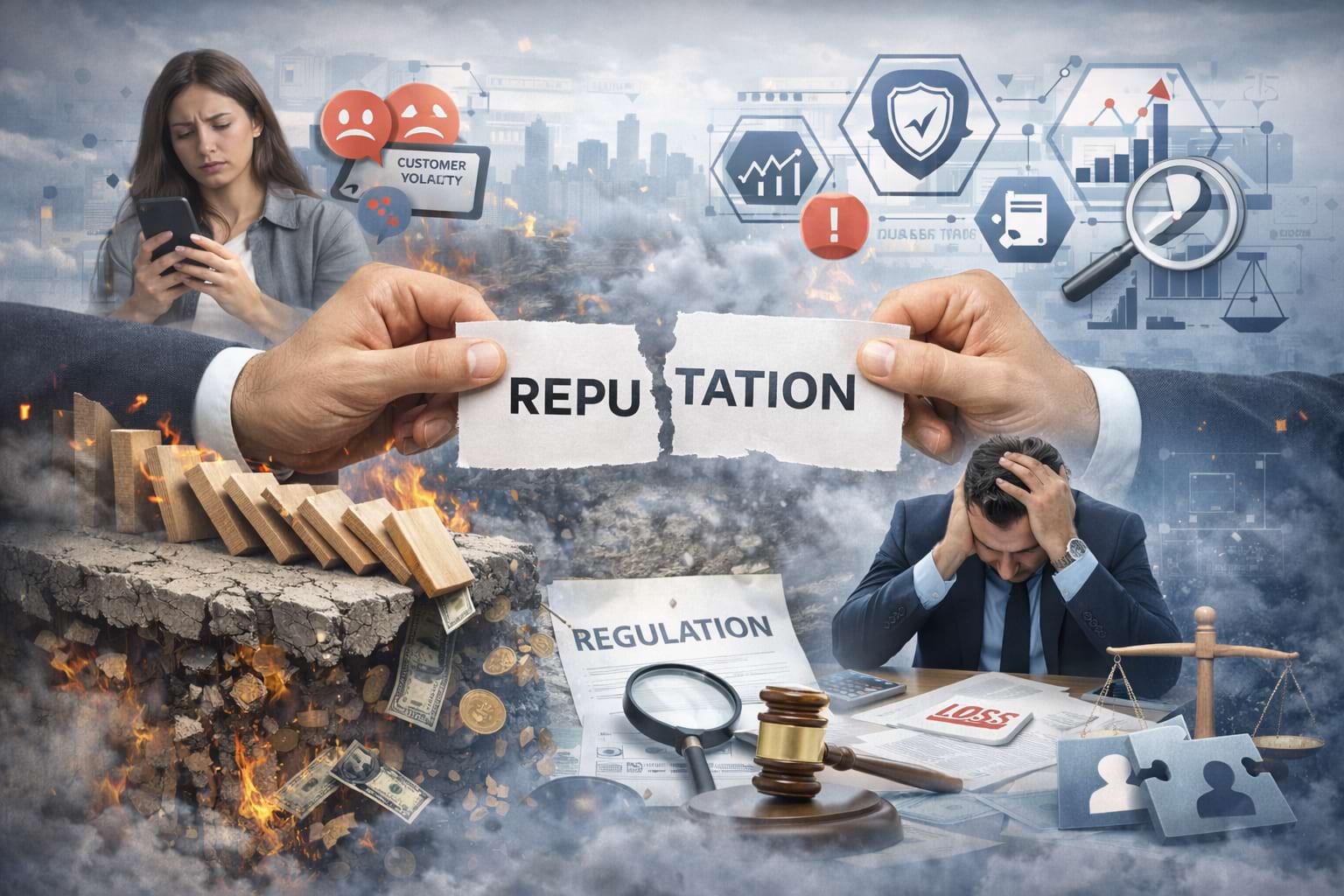
Reputational damage can have significant consequences, including customer losses, decreased sales, and regulatory scrutiny. To better understand these risks, explore reputational risk and its impact. It often requires considerable time and resources to repair. Organizations must recognize the signs of reputational damage early and respond with clear, consistent communication and corrective actions. Building resilience through ongoing reputation monitoring and alignment with company values helps minimize the long-term effects of reputational harm.
Start Measuring Your Reputational Risk
If you want to apply this without trial and error, download our comprehensive resource on reputational risk management. This guide will help you develop a tailored strategy to assess and manage your organization’s reputation effectively.
FAQs About Reputational Risk
Q1: What is reputational risk?
Reputational risk is the potential for a company to suffer financial or operational losses due to negative public perception. This can result from customer dissatisfaction, poor service, negative media coverage, or any event that damages trust in the brand.
Q2: How can I measure my company’s reputational risk?
Reputational risk can be measured using tools such as social media monitoring, customer feedback surveys, media analysis, and stakeholder engagement. These methods help assess public sentiment, identify trends, and detect early warning signs of potential issues.
Q3: What are some common examples of reputational risk?
Typical examples include data breaches, negative social media campaigns, product recalls, poor customer service incidents, and unethical behavior within an organization. Each of these can quickly erode trust and impact business performance.