What You’ll Learn:
- Understand the importance of measuring brand reputation and how it impacts business growth.
- Discover key metrics and tools to track and analyze your brand’s reputation effectively.
- Learn actionable steps to monitor, manage, and improve your brand’s presence, brand recognition, and customer perception.
Why Brand Reputation Matters
Your brand reputation is everything. Did you know that 77% of consumers consider brand reputation before making a purchase? A strong reputation not only enhances customer loyalty but also significantly boosts sales. Learn how business reputation management services support this growth. Measuring brand credibility helps your company gain a clear sense of how your audience perceives your value and services. If you’re not measuring your brand credibility, you’re risking stagnation in your business growth.

Understanding Brand Reputation Measurement
Brand reputation measurement is the systematic process of evaluating how your brand is perceived by customers, employees, stakeholders, and the general public. It involves collecting data from multiple sources to assess brand performance, customer behaviors, and overall sentiment. Accurate measurement enables businesses to identify opportunities and risks, helping to drive informed strategies that promote growth and trust.
What is Brand Health?
Brand health refers to the overall strength and vitality of your brand as perceived by your target market. It encompasses awareness, sentiment, loyalty, and engagement levels. Regularly monitoring brand health helps businesses spot trends, identify potential issues early, and maintain a positive connection with customers, especially when using a reputation scorecard. Tools that track brand performance provide a comprehensive view of your brand’s standing in the competitive landscape.
Key Metrics for Measuring Brand Reputation
Measuring brand credibility involves a mix of qualitative and quantitative metrics. Here are some essential metrics to focus on:
- Net Promoter Score (NPS) measures customer loyalty.
- Sentiment Analysis evaluates public opinion and brand health.
- Brand presence tracks how often your brand appears across social platforms and media coverage.
- Online Reviews aggregate consumer feedback from review sites.
- Customer Feedback provides direct insights into brand perceptions and satisfaction.
Measuring Brand Awareness and Brand Visibility
Brand visibility is a critical component of brand reputation measurement. It reflects how often and where your brand appears across digital channels, influencing public perception and recognition. To enhance your strategy, explore this comprehensive guide to reputation protection and brand safeguarding. Tools like social media monitoring and search engine tracking help quantify your brand’s visibility, providing insights into your reach and influence within your intended audience.

Using Google Analytics to Track Customer Behaviors
Google Analytics is a powerful tool that offers detailed insights into customer behavior on your website. By analyzing metrics such as session duration, bounce rate, and conversion paths, businesses can understand how visitors interact with their brand online. These insights are invaluable for optimizing user experience and enhancing brand reputation through targeted improvements.
The Power of Customer Feedback in Brand Reputation
Customer feedback is a vital component of measuring brand reputation. It provides direct insights into how your audience perceives your products, services, and overall brand experience. To improve results, explore these proven strategies to increase online reviews and boost customer feedback. By actively collecting and analyzing customer feedback, businesses can identify strengths and areas for improvement, fostering trust and driving continuous growth.

Leveraging Google Alerts for Real-Time Brand Monitoring
Google Alerts allows you to monitor mentions of your brand, competitors, or industry keywords across the web in real time. This tool helps you stay informed about public conversations, media coverage, and emerging issues related to your brand positioning. Prompt awareness through Google Alerts enables timely responses and proactive reputation management.
Harnessing AI Search and AI Answers for Reputation Monitoring
In today’s digital landscape, AI search engines and AI answers play a crucial role in shaping public perception of your brand. To stay ahead, explore the best ways to track brand mentions with AI search. AI search aggregates information from various online sources and provides synthesized responses that many consumers rely on. Monitoring how AI interprets and presents your brand can reveal hidden reputational risks or opportunities. Using AI-driven tools to analyze AI-generated responses about your brand helps you understand the narratives influencing your audience and enables you to respond proactively.
Success Stories in Brand Reputation
Let’s look at some real-world examples:
Coca-Cola’s Social Responsibility Efforts
Coca-Cola’s social responsibility initiatives have significantly boosted its reputation. They launched various sustainability programs, improving customer perception and increasing sales by 10% in one quarter. Their positive online presence helped enhance brand image and strengthen their connection with the target audience.
Amazon’s Focus on Customer Experience
Amazon exemplifies how prioritizing customer experience can pay off. Their relentless focus on consumer feedback and continuous brand reputation measurement has resulted in a 30% increase in customer loyalty. By monitoring reviews and tracking mentions, they maintain a competitive edge in their industry and remain highly visible to their audience.
The Risks of Ignoring Brand Reputation
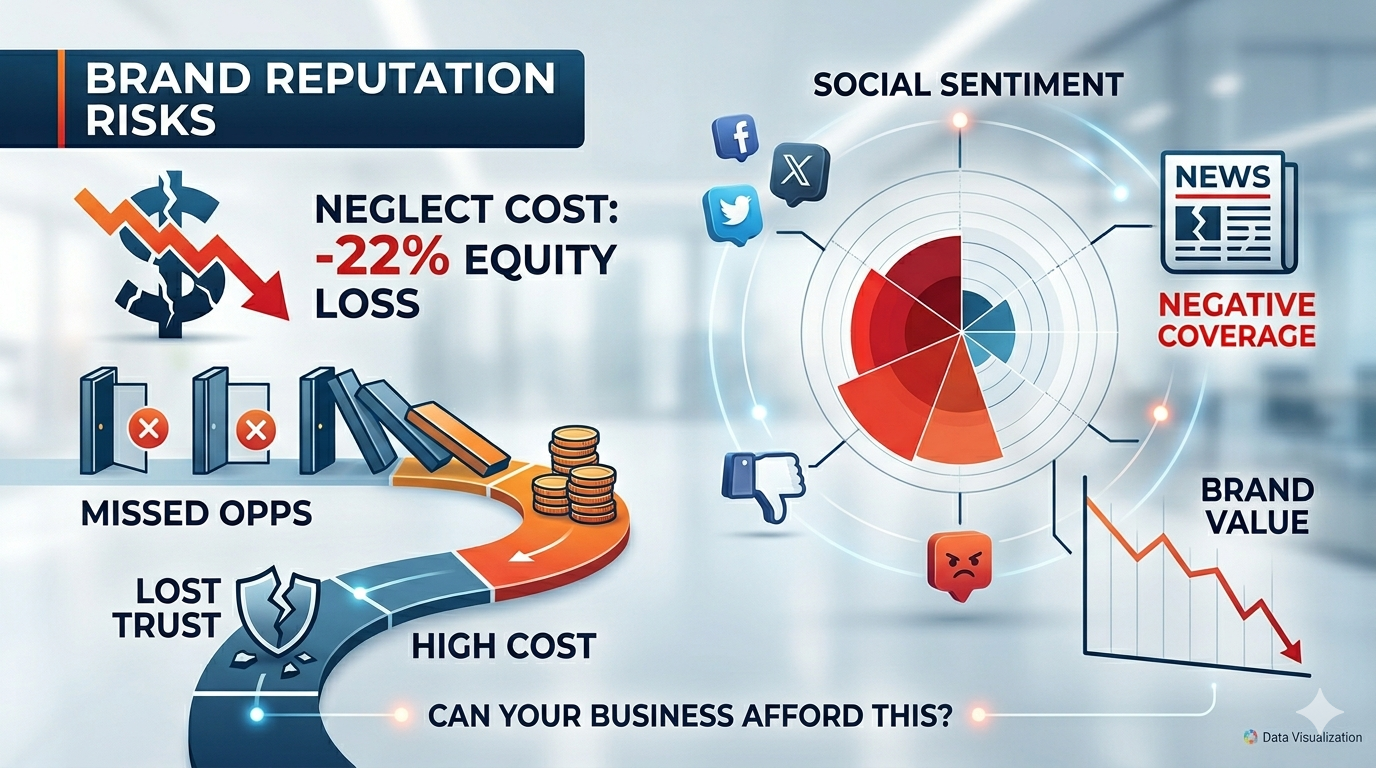
What happens if you ignore brand reputation? The cost can be staggering. Brands that neglect it risk losing up to 22% of their revenue. To understand how to prevent this, explore this complete guide to managing brand risks and reputation. Inaction leads to missed opportunities, decreased customer trust, and ultimately, dwindling sales. Negative sentiment on social platforms or poor media coverage can quickly damage your brand’s value. Can your business afford that?
Act Now or Fall Behind
Consider this: businesses that actively manage their brand credibility see a 25% increase in customer loyalty compared to those that don’t. The longer you wait to measure and manage your reputation, the more ground you lose to competitors who are already excelling. Monitoring website traffic alongside AI search and AI-generated answers to track sentiment and brand health in real time can help your company stay ahead in the fast-moving online environment.
Overcoming Common Hesitations
Some may hesitate to start measuring their brand reputation due to perceived complexities. Here are some common objections:
Too Complicated?
While it may seem daunting, using the right tools simplifies the process. Platforms like Reputation Prime offer user-friendly dashboards that make it easy to track key metrics. They help you monitor reviews, track mentions, and analyze customer behaviors across multiple channels.
No Time?
Investing time up front can save you significant resources later. Regular monitoring helps you catch issues before they escalate, saving time and money. Setting up Google Alerts to track brand presence at a moment’s notice ensures you never miss critical feedback or shifts in public opinion.
Not Sure Where to Start?
Begin by setting clear goals. Identify the aspects of brand reputation that matter most to your business, and utilize tools to track those metrics. To deepen your understanding, explore the fundamentals of business reputation. Focus on your target audience and their online conversations to understand how your brand stands in the industry. Pay attention to decision-making processes influenced by brand perceptions and customer feedback.
Steps to Start Tracking Brand Reputation
Ready to take action? Here’s a quick guide to get you started:
- Identify your key metrics.
- Choose the right tools for measurement.
- Set up alerts for brand mentions and monitor reviews.
- Regularly review your data and adjust your strategy.
From Insight to Execution
Now that you understand the importance of measuring brand reputation, it’s time to act. Start with tools that can track your brand’s credibility and visibility. Don’t let indecision hold you back; the right time to act is now.
Your Next Step: Start Tracking Today
If you want to apply this without trial and error, sign up for our reputation management tools. These tools will provide you with the insights needed to boost your brand’s presence and credibility, driving growth.
FAQs About Brand Reputation
Q1: What is brand reputation?
Brand reputation is how a company is perceived by customers, stakeholders, and the public. It is shaped by customer experiences, feedback, reviews, and overall sentiment across digital and offline channels.
Q2: How can I measure my brand reputation?
You can measure brand reputation using metrics such as Net Promoter Score (NPS), sentiment analysis, brand mentions, online reviews, and customer feedback trends. Monitoring these indicators provides insight into public perception and performance over time.
Q3: Why is brand reputation important for business growth?
A strong brand reputation builds trust, encourages customer loyalty, and increases conversions. It also provides a competitive advantage, helping businesses attract new customers and sustain long-term growth.