What You’ll Learn:
- The critical role brand image plays in shaping consumer trust, loyalty, and overall brand perception in today’s digital landscape.
- Real-world examples illustrating the impact of positive and negative brand credibility on business success and market value.
- Practical steps and strategies to effectively manage and enhance your brand’s credibility for sustained growth and competitive advantage.
Understanding Corporate Image and Corporate Reputation
Corporate image is the snapshot perception your target audience has of your business at any given moment. It encompasses the visual identity, messaging, and immediate impressions formed through interactions such as marketing materials, website design, and social media presence. In contrast, corporate reputation is the long-term aggregate of these images and experiences, reflecting the collective public esteem and trust built over time. Learn how business reputation management services support both. Both corporate image and reputation are vital for establishing a strong brand foundation and influencing stakeholder decisions.

An Unseen Force Shaping Your Brand
Have you ever clicked on a business’s website only to close it in seconds? You’re not alone. According to a Forbes study, 90% of consumers read online reviews before visiting a business. Imagine losing customers because your brand credibility doesn’t align with your brand values. In a landscape dominated by social media platforms and instant feedback, your company’s image and reputation have never been more critical. To gain a clear understanding of how these aspects influence your brand, it is essential to define and explain the concept of brand credibility from multiple perspectives.
Understanding Brand Image in Depth
Brand credibility is the perception of a brand, shaped by its visual identity and interactions with stakeholders. This includes everything from the logo and website design to customer service and online reviews. To strengthen your approach, explore this complete guide to online reputation strategies for protecting and building your brand image. A positive brand reputation can lead to increased trust, loyalty, and ultimately, higher sales. On the flip side, a negative image can deter potential customers and harm your corporate reputation. Managing the relationship between image and reputation is essential for organizations seeking to establish a distinctive, stable market presence. The concepts of brand image and reputation differ in that image is often the current perception held by a person or group, while reputation reflects accumulated impressions over time. Understanding these words and their subtle differences from your audience’s perspective can help you tailor your strategies more effectively.
Key Elements of a Strong Brand Image
A robust brand image hinges on several key factors and aspects:
- Consistency: Your brand’s message and visual identity should be cohesive across all channels to establish a stable and recognizable presence.
- Transparency: Open communication fosters trust among your employees and customers, contributing to a positive image and reputation.
- Engagement: Actively interacting with your audience on social media platforms enhances your corporate image and helps build your reputation.
These elements help explain how a brand can present itself authentically and be recognized positively by its network of customers and stakeholders.
The Relationship Between Image and Reputation
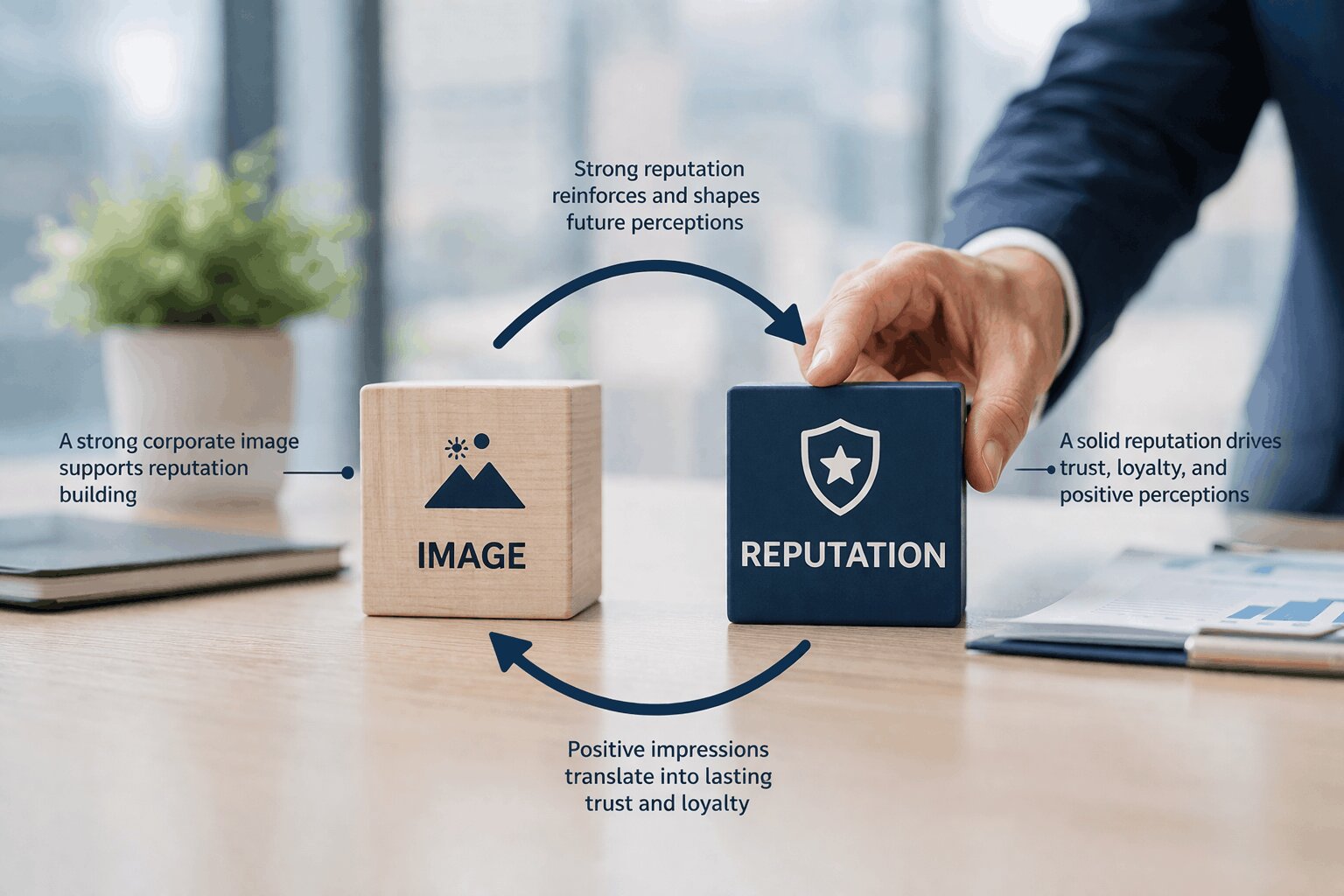
Image and reputation are closely intertwined but distinct concepts. While an image refers to the immediate perception or snapshot of a brand, reputation is the cumulative evaluation formed over time through consistent experiences and actions. Learn how to manage your reputation to strengthen this connection. Managing both effectively ensures that positive impressions translate into lasting trust and loyalty. A strong corporate image supports reputation building, while a solid reputation reinforces and shapes future perceptions, creating a virtuous cycle that benefits the brand.
Real-Life Examples of Brand Image Impact
The United Airlines Incident
In 2017, United Airlines faced a PR catastrophe when a passenger was forcibly removed from an overbooked flight. This incident severely damaged the airline’s brand credibility, leading to a $1.4 billion loss in market value. The fallout was immediate, resulting in a significant decline in customer trust and a tarnished corporate reputation. This example highlights how quickly public perception can affect a company’s financial health and the crucial need for active reputation management. From the perspective of innovation and crisis response, companies must be prepared to address such events with transparency and accountability to regain trust.
Starbucks’ Commitment to Corporate Responsibility
On the other hand, Starbucks has consistently maintained a positive reputation through its commitment to social responsibility. Initiatives like ethically sourced coffee and community engagement have helped the company cultivate a strong brand image. Their corporate reputation has translated into loyal customers and a premium pricing strategy, ultimately boosting their bottom line. This shows the difference that a well-managed image and reputation can make in establishing a company’s vision and long-term success. The details of such initiatives often become key aspects of public perception and help the brand to be recognized as a responsible and innovative leader in its industry.
The High Cost of Ignoring Image Management
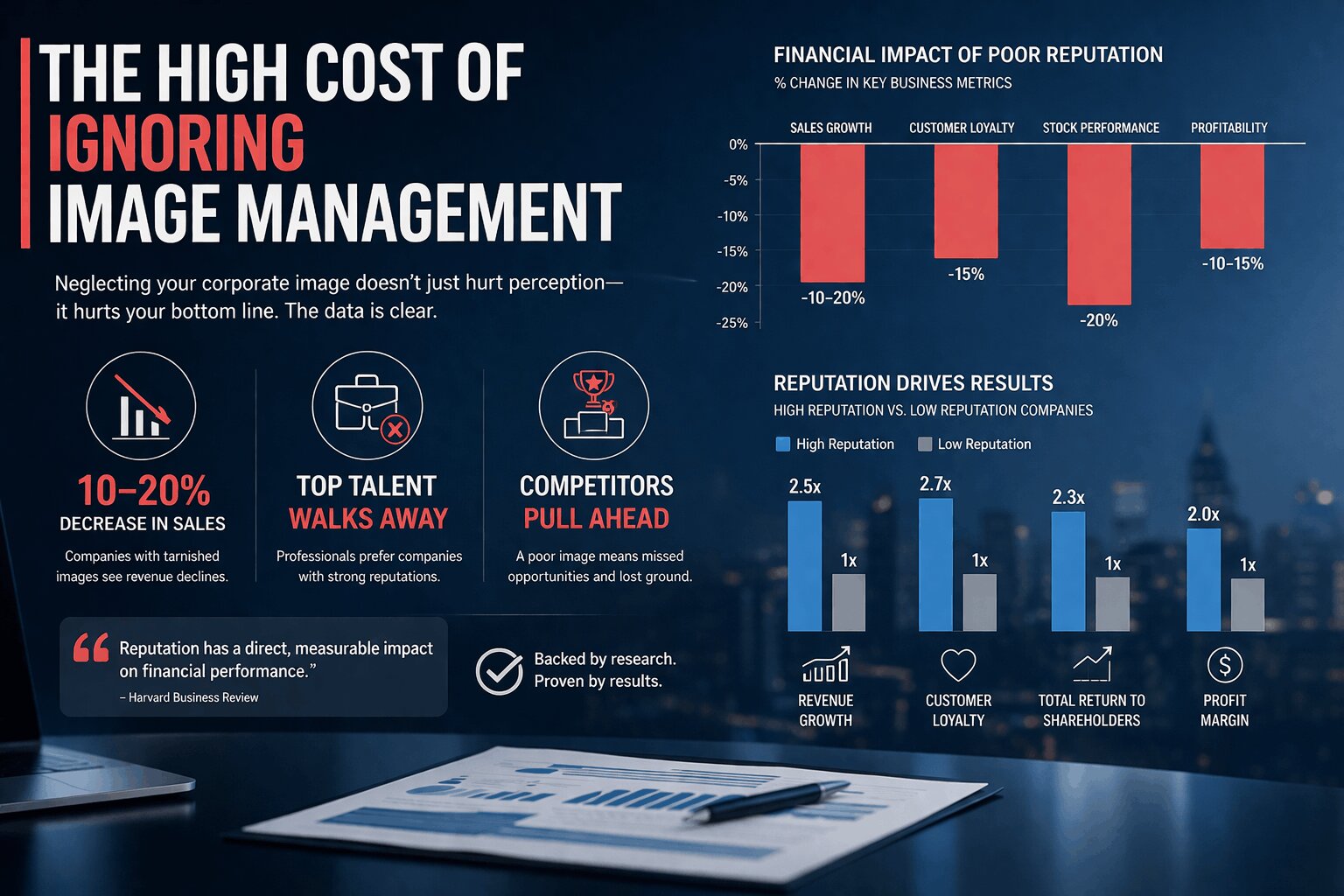
Ignoring your brand credibility can lead to severe consequences. A company with a tarnished corporate image may see a 10–20% decrease in sales or even lose top talent who prefer working for companies with positive reputations. To understand broader implications, explore reputation risk in banking. Plus, in a competitive market, neglecting your brand image can create missed opportunities and give your competitors a significant edge. Research consistently shows that public perception and reputation directly affect customer loyalty and business outcomes. From a university study to business reports, the claim that reputation impacts financial performance is widely recognized and supported by data.
How Delaying Action Can Hurt Your Brand
Consider this: every day you delay addressing issues related to your brand credibility risks alienating potential customers. While your competitors actively manage their brand image, you could be losing out on top talent and consumer trust. The longer you wait, the tougher it becomes to recover from a negative perception. The practice of proactive reputation management is crucial in today’s marketing and business context. Taking these aspects into account early on can help you maintain a positive network of supporters and customers.
Addressing Common Concerns About Brand Credibility Management
“My business is too small to worry about reputation.”
Every business, regardless of size, is vulnerable to reputation issues. Negative reviews on platforms like Google or Yelp can significantly impact your target audience’s perception. A single bad review can deter potential customers and cost you sales. This is especially challenging because online content can be easily altered and spread quickly, affecting your image and reputation. To better understand the role involved, learn what a reputation manager does. From the perspective of small businesses, understanding the details and concepts of reputation management is essential to gain competitive advantage.
“I don’t have time to manage my image.”
While it may feel time-consuming, managing your corporate image can be integrated into your daily operations. Start small, set aside a few hours each week to engage with your audience and respond to reviews. Using reputation management tools and insights can help streamline this process and make it more effective. These tools often provide a network of data and analytics to explain public sentiment and help you present your brand in a positive light.
“My product speaks for itself.”
Even the best products need a strong brand image to stand out. To understand this concept, explore what brand image means. Without effective brand management, your product might not reach its full potential in a crowded marketplace. The relationship between product quality and brand reputation is complex, and a distinctive image can contribute significantly to market success. From the perspective of innovation and customer experience, the image you present can differ significantly from the product itself in consumers’ minds.
Actionable Steps to Enhance Your Brand Credibility
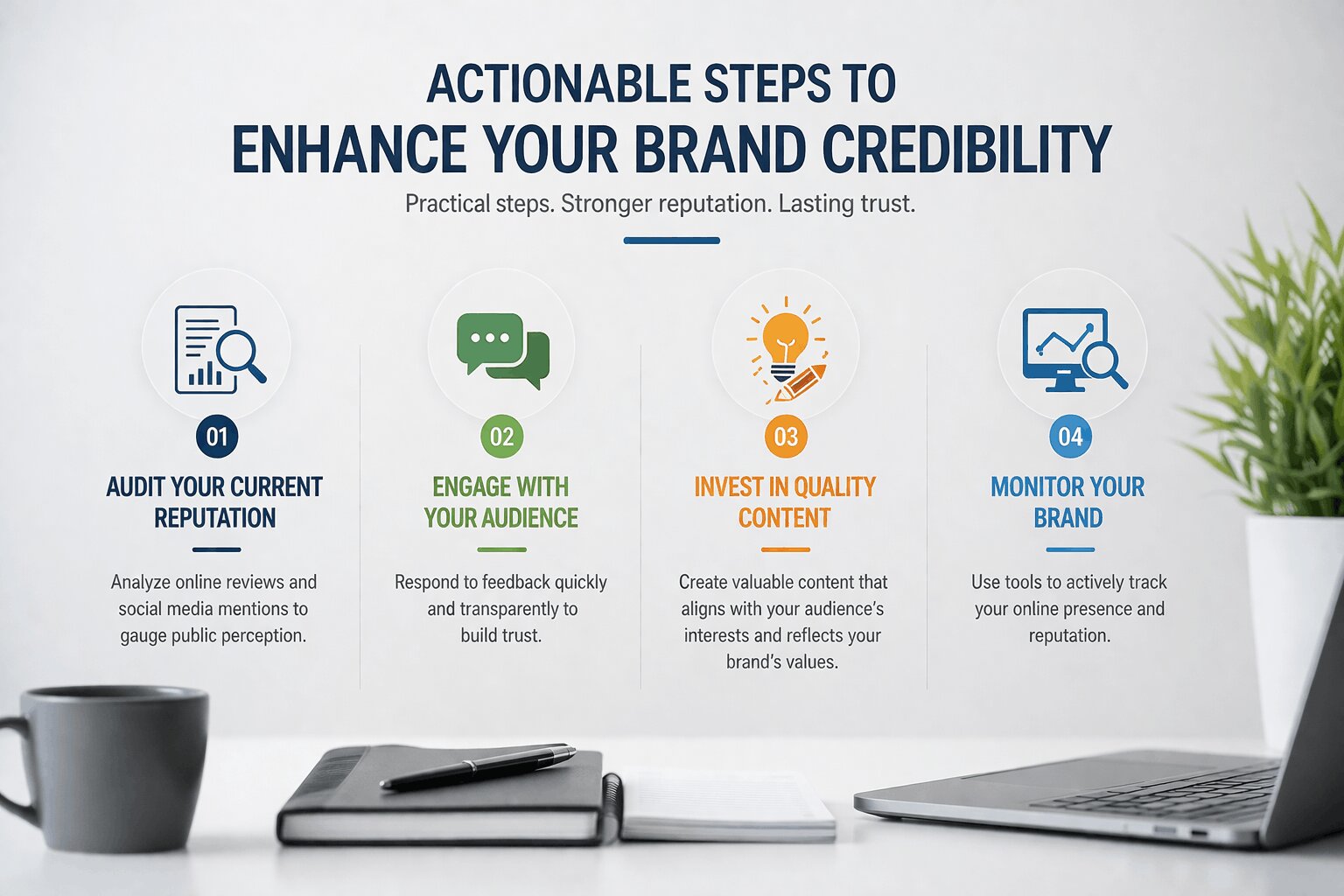
So, how do you enhance your brand image? Follow these practical steps:
- Audit Your Current Reputation: Analyze online reviews and social media mentions to gauge public perception.
- Engage with Your Audience: Respond to feedback quickly and transparently to build trust.
- Invest in Quality Content: Create valuable content that aligns with your target audience’s interests and reflects your brand’s values.
- Monitor Your Brand: Use tools to track your online presence and reputation actively.
These steps help you gain a clearer understanding of your brand’s position and present your best self consistently.
Seize the Moment for Your Brand’s Future
Take a moment to consider the power of your brand credibility. By actively managing it, you can protect your brand while positioning it for growth. If you want to implement this without trial and error, book a call with us to develop a tailored strategy that accounts for all the concepts and details necessary to succeed.
FAQs About Brand Credibility
Q1: What is brand credibility?
Brand credibility is the overall perception of a company and its image, shaped by factors such as visual identity, customer experiences, online reviews, and media coverage. It reflects how trustworthy and reliable a brand appears to its audience and stakeholders.
Q2: How can I improve my brand’s credibility?
Improving brand credibility starts with auditing your current reputation, actively engaging with your audience, and consistently delivering high-quality products or services. Transparent communication and positive customer interactions also play a key role in strengthening trust.
Q3: Why is a positive brand reputation important?
A positive brand reputation builds trust, increases customer loyalty, and encourages repeat business. It also enhances your competitive position and can lead to higher sales, stronger market share, and long-term business growth.
Q4: What are the risks of neglecting brand reputation?
Neglecting your brand reputation can result in lost customers, declining sales, and reduced trust in your business. Over time, it can weaken your competitive advantage and make it harder to attract new customers or retain existing ones.