What You’ll Learn:
- The critical role that reputation management plays in attracting and retaining apartment residents, including its impact on occupancy and revenue.
- Effective strategies for monitoring, engaging with, and responding to online feedback across multiple platforms to enhance your apartment community’s brand health.
- How leveraging reputation-monitoring software and consistent engagement can improve search visibility, local SEO, and overall resident satisfaction.
In a world where prospective renters consult online feedback before even setting foot in an apartment community, apartment reputation management has never been more essential. Did you know that 93% of consumers read online reviews before making a purchase decision? This staggering statistic highlights the undeniable power of online reputation in the multifamily housing market. If your apartment complex isn’t leveraging its online presence through effective review management and accurate property details, you’re missing out on potential residents and revenue.
Why Apartment Reputation Management Matters for Multifamily Growth
Apartment reputation management is the proactive process of monitoring, influencing, and shaping how your community is perceived across digital platforms. It encompasses everything from managing online reviews to engaging residents and ensuring a consistent brand voice. Effective apartment reputation management not only builds trust but also drives occupancy and supports long-term marketing efforts. Maintaining a strong online presence across multiple channels is critical to attracting and retaining residents in today’s competitive market.

The Cost of Inaction in Reputation Management
Ignoring your apartment’s reputation can lead to significant financial repercussions. When you fail to implement a proactive reputation-building strategy, address negative posts, or engage with resident feedback, you risk losing up to 30% of potential renters. This loss isn’t just theoretical; consider a property with 100 units charging $1,500 in rent. A mere 10% vacancy rate due to a poor reputation translates into $180,000 in lost revenue annually. That’s the cost of inaction.
Note: Prices are just examples and may not reflect actual costs.
Understanding the Landscape of Online Reputation
Online reputation management involves monitoring and influencing how your apartment community is perceived across various platforms. From Google Business Profile to social media channels, your property’s reputation is shaped by resident reviews and public reviews. A BrightLocal study found that 82% of consumers read online reviews for local businesses, and 96% of consumers read them in general, making it imperative that property managers actively manage their online image to improve search performance.
The Importance of Online Reviews in Apartment Reputation
Online reviews are a critical component of apartment reputation management. They provide authentic feedback from current and past residents, influencing prospects’ decisions. Managing online reviews effectively means not only using proven strategies to increase online reviews and boost customer feedback but also responding promptly to unfavorable reviews, which can mitigate damage and demonstrate your commitment to resident happiness. A well-maintained online review profile enhances your property’s visibility in local search results and builds trust with potential renters.
Components of Effective Reputation Management
- Monitoring Reviews: Regularly check review sites to stay updated on resident feedback, using reputation monitoring software and reporting tools to track new reviews and gauge satisfaction. This centralized monitoring improves response rates and helps maintain a consistent presence.
- Engage with Residents: Respond to both positive and negative reviews with on-brand responses to show you value detailed feedback and maintain a consistent voice. Timely review response within 24–48 hours can reduce turnover and improve resident retention.
- Encouraging Positive Feedback: Ask satisfied residents to leave good reviews, which can enhance your property’s reputation and improve local search rankings. Offering rent discounts or incentives, when compliant, can encourage feedback and boost your apartment review volume.
Creating a Consistent Brand Voice
Your apartment’s online presence should reflect a consistent brand tone that resonates with your target demographic. Whether it’s a quirky response to a review or a professional acknowledgment of resident concerns, maintaining this voice across platforms enhances your credibility. Using pre-approved response templates can help your on-site teams deliver timely, fair housing-compliant, and on-brand responses. A cohesive brand image fosters trust among prospective renters and future residents alike.
Fair Housing Compliance in Reputation Management
Maintaining fair housing compliance is essential when responding to online reviews and engaging with residents. Responses must be careful to avoid discriminatory language and comply with all relevant regulations, as failing to do so can create a significant reputation risk for the property. Using templates and training on fair housing guidelines ensures that on-site teams and marketing efforts remain compliant while providing on-brand responses. This protects your property from legal risks and builds confidence among residents and prospects. Including responses on platforms like Google Business Profile is also crucial for maintaining a consistent and compliant online presence.
Addressing Negative Reviews and Negative Posts
When it comes to negative reviews and negative posts, transparency and professionalism are key. Instead of hiding from criticism, address concerns head-on. For instance, if a resident complains about maintenance delays, respond with empathy and outline steps you’re taking to resolve the issue. This approach not only mitigates the impact of negative feedback but also demonstrates your commitment to resident happiness, thereby helping reduce compliance risks. Prioritizing maintenance and rapid response times is critical, as competitive properties aim for repair speeds of roughly 3.4 to 6.8 days. Handling negativity professionally and often attempting to move the conversation to private channels is also important.
Marketing Efforts That Amplify Reputation Management
Integrating marketing and reputation into your broader efforts strengthens your apartment community’s overall appeal. Highlighting positive feedback in advertising campaigns, social media posts, and email newsletters reinforces trust and encourages prospects to explore your community. Coordinated marketing efforts ensure that your online presence is consistent and compelling, driving both awareness and engagement. Combining reputation management with targeted multifamily marketing strategies can significantly boost lead generation and lease conversions.
Maximizing Your Apartment Review Strategy
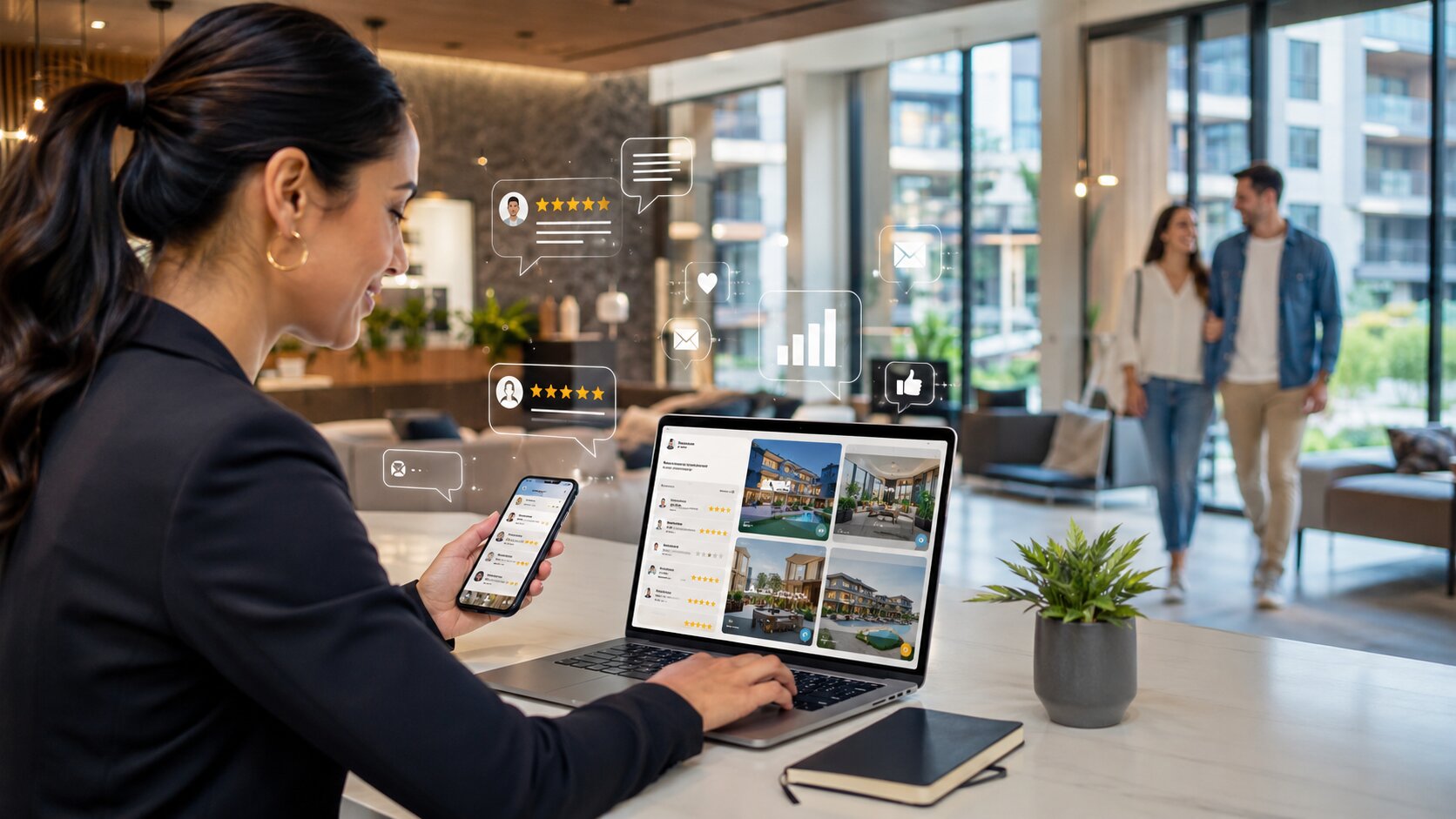
A robust apartment review strategy involves more than just collecting reviews. It requires proactive solicitation of feedback at key resident touchpoints, such as after a successful tour or after maintenance is completed. Automating review requests with reputation-monitoring software ensures a steady flow of fresh content, improving local search rankings. Regularly analyzing review trends helps identify operational strengths and weaknesses, enabling your team to address issues before they escalate. This dynamic approach to apartment review management builds credibility and attracts high-quality tenants.
Enhancing Your Online Presence Across Platforms
Your apartment’s online presence extends beyond review sites to include social media profiles, local listings, and search engine results. Maintaining accurate, up-to-date information across platforms like Google Business Profile, Apartments.com, and Yelp is essential for building trust and improving discoverability. Utilizing effective ORM strategies and reputation management tools helps centralize this data, ensuring consistency and enabling quick updates. A strong online presence supports your apartment community’s brand reputation and makes it easier for prospects to find and choose your property.
Improving Visibility Through Local Search Optimization
Local search optimization is a critical benefit of effective reputation management. Google’s algorithms consider factors such as review quantity, recency, and response cadence when ranking properties in local search results. Actively managing your apartment’s reputation by responding promptly to reviews and encouraging positive feedback can boost your local rankings. Higher local search visibility leads to increased website traffic, more tour requests, and ultimately higher occupancy rates. Leveraging reputation management software to monitor local search performance keeps your team competitive in the multifamily market.
Real-World Examples of Successful Reputation Management
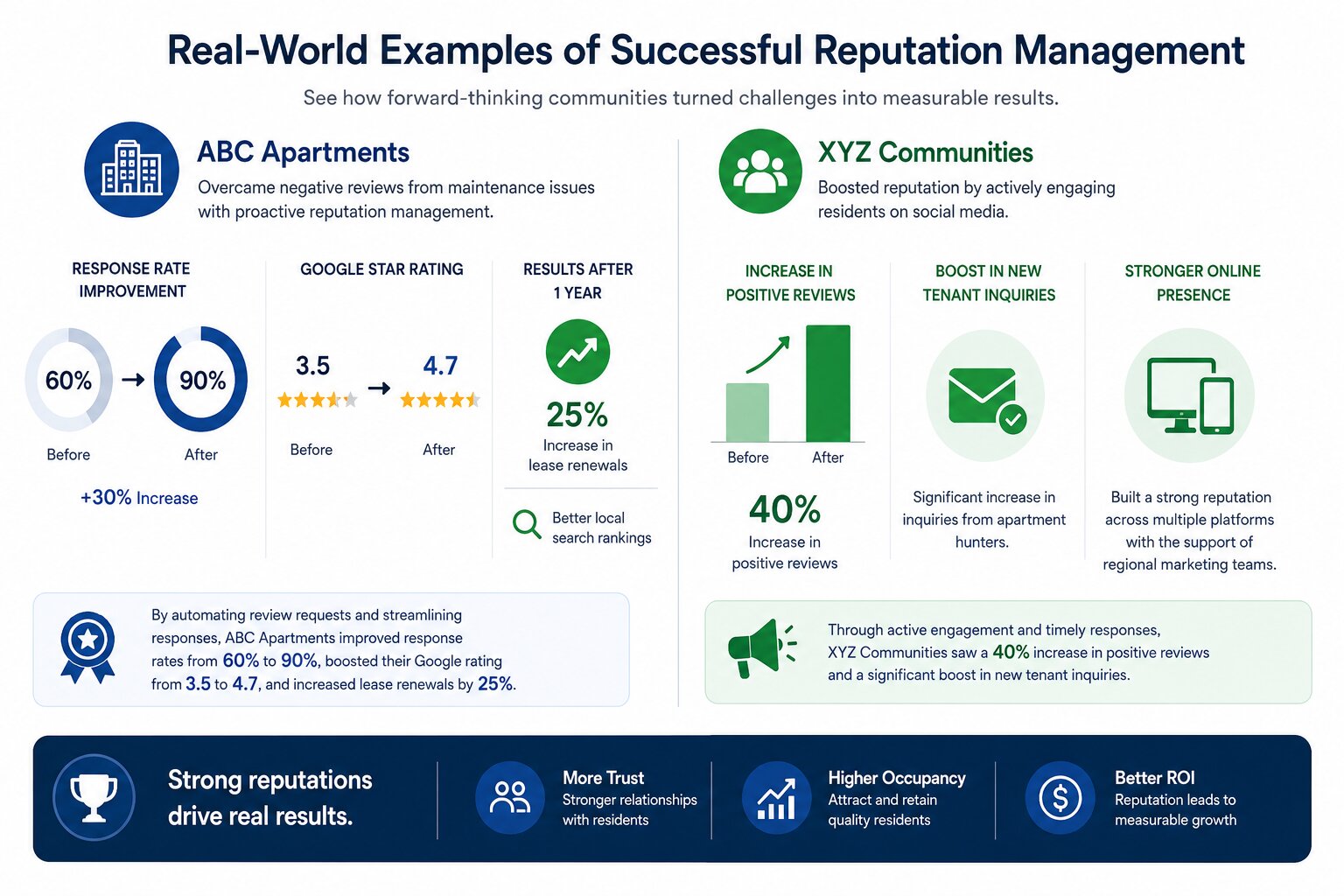
Consider the case of ABC Apartments, which faced a wave of unfavorable reviews due to maintenance issues. By implementing reputation management software that automates review requests and streamlines responses, they improved their response rates from 60% to 90%. Over a year, their Google star rating jumped from 3.5 to 4.7, resulting in a 25% increase in lease renewals and better local search rankings.
Another example is XYZ Communities, which actively engaged with residents on social media. By sharing success stories and promptly responding to feedback, they saw a 40% increase in positive reviews and a significant boost in new tenant inquiries from apartment hunters. Their multifamily marketing efforts, supported by regional teams, helped build a strong online presence and reputation across multiple platforms.
Strategies for Enhancing Your Apartment’s Reputation
To effectively manage your apartment’s reputation, consider the following actionable steps:
- Utilize reputation management software to automate review requests and monitor feedback across platforms, integrating with your property management system for seamless data flow and improved search performance.
- Engage with residents by responding to reviews within 24 hours using smart automation and pre-approved response templates, boosting response rates and demonstrating active management.
- Encourage current tenants to share their positive experiences on review sites and social media to improve search rankings and attract future residents.
- Regularly analyze sentiment trends using sentiment analysis tools to identify areas for improvement and track the impact of your multifamily marketing efforts.
- Implement a follow-up process for maintenance requests to ensure resident happiness and reduce negative posts, thereby improving your apartment review scores and overall reputation.
Empowering On-Site Teams in Reputation Management
On-site teams play a crucial role in reputation management by providing timely, personalized responses to resident feedback. Equipping these teams with the right tools, training, and pre-approved templates enables them to maintain a consistent brand tone and respond in ways that align with fair housing and company policies. Their frontline engagement often shapes the community’s public perception and resident happiness.
Act Now to Strengthen Resident Trust and Occupancy
As you consider the implications of neglecting your apartment’s reputation, ask yourself: Can you afford to lose potential residents? Every day you delay implementing effective strategies to build a strong business reputation is another day you risk losing prospects to competitors who understand the importance of an online presence. Taking action now can set you on a path to improved resident engagement and increased occupancy rates.

What Happens After You Take Action?
Once you begin to manage your apartment’s reputation effectively, you can expect a noticeable shift in your community’s perception. By leveraging reputation management for apartments and specialized reporting tools, you can streamline your processes and reduce workload. You’ll gain valuable insights into resident happiness and sentiment trends, allowing you to make informed decisions that benefit your entire portfolio. This data-driven approach enables regional teams and leadership to monitor performance and adjust strategies to maintain a competitive edge in the multifamily industry.
FAQs About Apartment Credibility Management
Q1: What is credibility management for apartments?
Credibility management for apartments involves monitoring and improving how your property is perceived online. This includes managing reviews, engaging with residents, and maintaining a consistent brand voice across review platforms, social media, and listing sites.
Q2: Why is online reputation important for apartment communities?
Your online reputation directly influences prospective renters’ decisions. A strong reputation with positive reviews and active engagement can increase occupancy rates and revenue, while negative feedback can discourage potential tenants from choosing your property.
Q3: How can I encourage residents to leave positive reviews?
Encourage residents to leave reviews by maintaining strong communication, reminding them how valuable their feedback is, and making the process simple with direct review links. Positive resident experiences combined with easy review access often lead to higher participation.
Q4: What tools are available for managing my apartment’s online reputation?
Many reputation management platforms can automate review requests, monitor resident feedback, and provide insights into engagement trends. These tools help streamline communication, improve response times, and maintain a stronger online presence.
Q5: What should I do if I receive negative feedback?
Respond quickly and professionally. Acknowledge the resident’s concerns, apologize when appropriate, and explain the steps you are taking to resolve the issue. Thoughtful responses demonstrate that your property values resident satisfaction and actively works to improve the living experience.