What You’ll Learn:
How to evaluate the credibility of websites and online sources efficiently.
The importance of verifying writer credentials, citations, and data to avoid misinformation.
Practical strategies and tools to detect bias and improve research reliability.
Stop losing trust in bad signals

Trust is fragile. Incorrect claims on authoritative-looking sites erode trust, waste ad dollars, and drive poor decisions. A single viral article with poor citations can influence millions and damage reputations from local departments to national presidential campaigns. Use a credibility checker combining facts, writer credentials, and clear metrics to verify what matters fast. Explore how business reputation management services help protect and rebuild trust.
Check document credibility with a structured approach
Evaluating document credibility is essential to ensure that the information you rely on is accurate and trustworthy. This involves assessing the source's reputation, verifying author credentials, and confirming that the content is supported by evidence and citations. Employing a systematic method helps avoid misinformation and strengthens your research or decision-making. Also consider the source's currency, and make sure the publication or revision date is recent enough to stay relevant to your topic.
Run this 7-step check in 10 to 15 minutes
Make this source credibility checklist a daily habit for assessing websites, news sources, journals, or any online URL or web page.
Verify author credentials and affiliations, checking expertise and potential bias.
Scan citations and academic research, confirming that peer-reviewed sources support claims.
Cross-check multiple reputable news outlets, fact-checking organizations, and media bias platforms.
Assess data and figures for manipulation, verifying original datasets or tables.
Check funding and interest disclosures for transparency and to identify whether a particular organization funded the research.
Inspect images and URLs, verify metadata, and search for altered images.
Score transparency and corrections, publishing an overall credibility rating.
Understand credible sources and their importance
Credible sources form the backbone of reliable information. These sources are free from bias, supported by evidence, and often peer-reviewed or published by reputable organizations or research centers. Using credible sources in your research or writing ensures that your conclusions are based on trustworthy data and scholarly research. Always consider the source's intended audience, as it can influence the tone, purpose, and objectivity of the content.
| Step | Signal | What to do |
|---|---|---|
| 1 | Author credentials | Search the name, university, past publications, and assess expertise. |
| 2 | Citations | Verify cited papers and evidence supporting claims. |
| 3 | Multiple sources | Cross-check with reputable news and fact-verification tools, including media bias fact-check platforms. |
Media bias and its impact on news sources
Media bias shapes public perception through selective reporting or framing. Recognizing this is essential to evaluate news reliability and distinguish facts from opinion or propaganda. Using media bias awareness in credibility checks helps inform decision-making and manage narrative perception—especially when you actively manage social security social media campaigns.
Utilizing media bias fact-check platforms
Media bias fact-checking platforms assess the political and ideological leanings of news outlets. These tools help identify biases that shape coverage, giving you a clearer understanding of the information. Combining these resources with fact-verification tools strengthens claim verification and objectivity.
Source credibility checker: a vital tool for verification
A source credibility checker analyzes a writer's credentials, citations, data quality, and transparency. It detects false information and bias by cross-referencing multiple sources and provides a comprehensive credibility score. Using a reputation scorecard standardizes evaluation, streamlines verification, and supports responsible information sharing.
Ensuring Your Source Is Credible
Determining if a source is credible is vital for maintaining the integrity of your research. A source credible enough for your work should be authored by experts, backed by evidence, and free from bias. Always verify the source's reputation, check for citations, and confirm that the information is up to date to ensure reliability. Internal consistency is also important to ensure arguments do not contradict each other. Additionally, assessing the source's objectivity helps identify potential bias or promotional intent.
Evaluating content for accuracy and trustworthiness
Evaluating content is a crucial part of evaluating document credibility. This involves reviewing the clarity, organization, and accessibility of the information presented. Well-structured, clearly explained content from trustworthy sources improves the document's overall reliability.
Fact-check tools for reliable research
Fact-checking tools help journalists, researchers, and the public verify claims and data accuracy in news. These include databases, browser extensions, and websites specializing in debunking false information. Integrating these tools enhances research quality and reliability by ensuring the use of reliable sources.
The role of fact-checking in combating misinformation
Fact-checking systematically evaluates claims using evidence and expert analysis. It is crucial for combating false information, especially as it spreads rapidly online. Understanding the risks of losing reputation underscores why incorporating fact-checking practices protects work integrity and supports informed decision-making.
Proof from two case studies
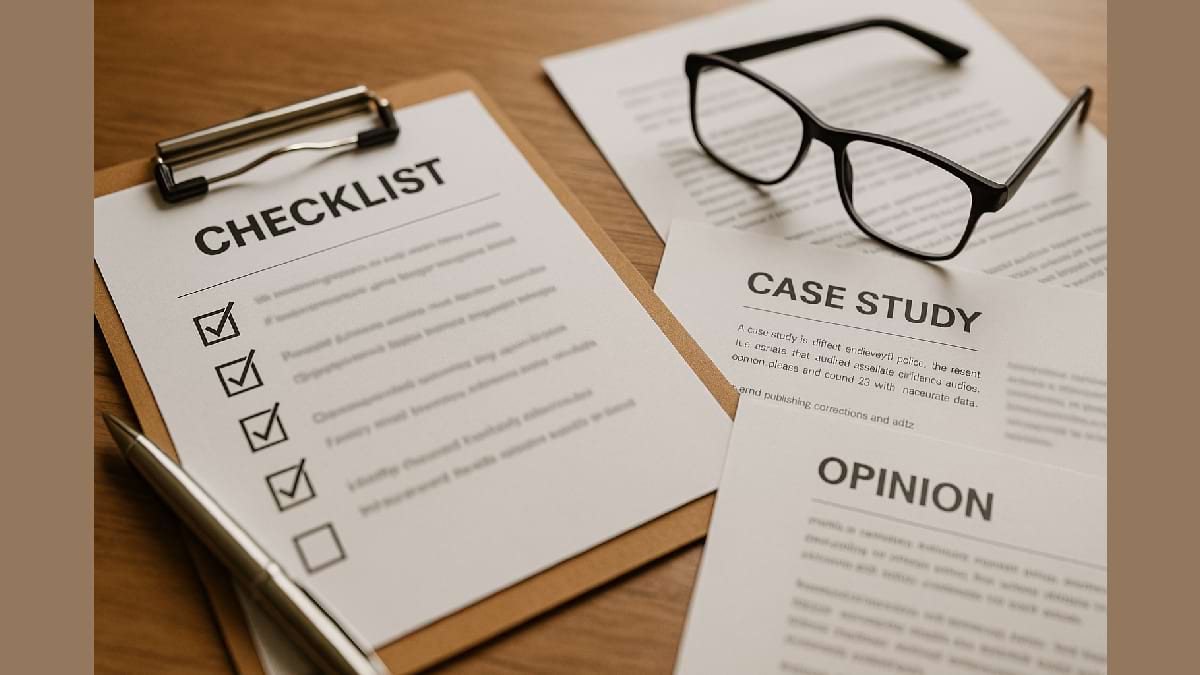
Case study 1: MediVerify, a regional health site, used this checklist and reduced incorrect health stories by 82%. Traffic stabilized, and bounce rates fell 14% after requiring citations and writer credentials. Editorial standards clearly move the needle.
Case study 2: Campus Voice, a university outlet, audited 120 opinion pieces and found 27 with inaccurate data. After corrections and added citations, credibility scores improved, and student trust rose 34%.
Cost of ignoring credibility
Ignoring credibility spreads false information, loses audiences, and damages brands. False stories cause lost revenue, lower conversions, and scrutiny. Prompt action protects reputation; delays empower less responsible actors. Learn how white-label online reputation management helps safeguard truthful information.
Understanding the CRAAP test for evaluating sources
The CRAAP test is a widely used method for evaluating source credibility. It assesses Currency, Relevance, Authority, Accuracy, and Purpose to determine if a source is reliable and appropriate for your research. Applying the CRAAP test helps ensure that web sources, academic research, and other documents meet high standards of trustworthiness.
Using primary sources and scholarly research
Primary sources provide direct evidence about a subject and are often considered the most credible in academic research. Combining primary sources with scholarly research from peer-reviewed journals and academic databases strengthens the validity of your findings and supports accurate information in your work. Original research and articles that cite it add depth and reliability to your sources and provide essential background information.
Leveraging open educational resources and Wikipedia articles
Open educational resources (OERs) offer freely accessible materials for learning and research. While OERs can be valuable, evaluate their credibility using established criteria like the CRAAP test. Wikipedia articles can serve as a starting point for background information, but supplement them with more reliable, scholarly sources for academic writing. Ensure that OERs are licensed for free use and created by reputable organizations. Also, incorporating your own research and using a reliable search engine can improve the quality and credibility of your sources.
Furthermore, actively managing your digital identity, such as regularly monitoring search results for your name and curating a professional online presence, as outlined in Reputation Prime's guide to personal online reputation management, helps ensure that public information about your scholarly and professional work remains positive and credible. Be mindful of whether the research is funded, and consider the sponsoring organization's potential influence to assess biases or conflicts of interest.
Evaluating web sources and the source's reputation
When assessing web sources, consider the source's reputation, the author's expertise, the content's quality, and the intended audience. Reliable web sources typically have transparent authorship, clear citations, and are affiliated with reputable educational institutions or organizations. Exercise caution with personal websites or sources with vested interests to maintain the accuracy and trustworthiness of your research. Check the page layout and URL domain to help determine credibility.
How to Identify a Credible Source
Determining if a source is credible is crucial for ensuring the accuracy and reliability of your research. A credible source typically provides clear author credentials, transparent citations, and evidence-backed information. Always evaluate the source's reputation and the context in which the source was created to confirm its trustworthiness. Utilizing specialized software, such as the best online reputation management tools for businesses, can help organizations actively track brand sentiment, monitor source credibility, and safeguard digital trust. For example, when researching topics like Social Security, verify that the information comes from official government publications or reputable research institutions to ensure accuracy and avoid misinformation.
Integrating academic research and peer review in credibility checks
Academic research often undergoes peer review, a rigorous evaluation process that enhances source credibility. Peer-reviewed journals are among the most reliable sources for research papers and scholarly writing. Incorporating peer-reviewed studies and academic research databases in your credibility checks ensures your work is grounded in authoritative and verified information.
Common objections and fast responses

“It takes too long.” The 7-step check takes 10 to 15 minutes; avoiding false stories saves much more time.
“We lack research skills.” Fact-verification tools and source lists from the Annenberg Public Policy Center, university libraries, and credibility platforms make verification quick.
“We rely on opinions.” Clearly label opinions, require citations for facts, and disclose conflicts to maintain trust.
Book a call and get a tailored audit
Book a call for a tailored site audit, credibility ranking, and prioritized fixes. This reduces guesswork and shows how to restore reputation while turning transparency into measurable gains by focusing on credible sources.
Start now and protect your audience

Act now for immediate access to tools, credibility scores, and ongoing monitoring so journalists, voters, students, and millions can trust your reporting. Choose reliability over noise, focusing on credible sources and verified news.
FAQs About Credibility Checking & Fact Verification
What does a credibility checker evaluate?
A credibility checker (or analyzer) evaluates content reliability by scoring factors such as author credentials, source citations, data quality, and transparency. It often uses fact-checking tools, cross-references multiple sources and other articles, and flags potential bias or misinformation to quickly verify claims.
How does detection work in credibility checking?
Detection involves image analysis, metadata inspection, and reverse image searches to identify manipulation. Verifying original datasets and comparing figures with trusted sources can also expose altered visuals or misleading data claims.
Which sources are generally more reliable?
In general, peer-reviewed academic research, university publications, and well-cited studies are more reliable than unverified news sources. However, always evaluate the publisher's credibility, the supporting evidence, and whether multiple reputable sources confirm the findings.
Are there free fact-checking tools available?
Yes. Many reputable fact-checking tools are available for free, including resources from organizations like the Annenberg Public Policy Center and established fact-checking websites. These tools help verify claims, identify misinformation, and assess source credibility.
Does adding verification steps significantly increase workload?
Not significantly. While adding verification steps may take a small amount of extra time upfront, it prevents costly corrections later. In the long run, it improves overall content quality, accuracy, and audience trust.
Take the next step. A short check now prevents major fixes later and keeps your audience confident in your reporting.