What You’ll Learn:
- The critical importance of CEO reputation management for protecting both personal and company brand value in today’s fast-paced digital landscape.
- Practical strategies for building, monitoring, and maintaining a strong CEO brand that aligns with company values and drives business success.
- How to proactively handle reputation challenges and crises to preserve trust, stakeholder confidence, and positive media coverage.
Why CEO Reputation Management Matters for Leaders
In a time when information spreads faster than wildfire, a CEO’s reputation can make or break a company. According to a study by the Reputation Institute, 70% of consumers would stop buying from a company if they perceive its CEO as having a bad reputation. This staggering statistic underscores the essence of CEO reputation management: it’s not just about protecting your personal reputation; it’s about safeguarding the company’s success and brand image. To strengthen leadership visibility, explore executive reputation management services. A CEO’s reputation affects the opinions about companies for 66% of consumers, making it a critical component of business strategy. Building a positive reputation is therefore essential for long-term success and stakeholder trust.

Understanding Executive Reputation and CEO Brand
Executive reputation encompasses the overall perception of a CEO’s leadership, credibility, and integrity among stakeholders. It directly influences the company’s brand and corporate reputation. Building a strong CEO brand involves aligning personal values with the company’s mission and consistently communicating this alignment to the public. A well-crafted CEO brand enhances trust, authority, and stakeholder confidence, serving as a powerful asset in today’s competitive business environment.
The Ripple Effect of a Strong CEO Reputation
A positive CEO reputation isn’t merely a nice-to-have; it’s a critical factor that influences stakeholder trust, investor confidence, and overall brand perception. To strengthen this approach, explore how to manage online reputation. Take Satya Nadella, CEO of Microsoft. Under his leadership, the company’s market value surged from $300 billion to over $2 trillion. This transformation stemmed from a strong executive brand and a commitment to transparency and ethical leadership, aligning with the company’s values and mission. Companies led by well-regarded CEOs often find it easier to navigate challenges and secure partnerships, demonstrating just what a strong reputation can achieve. Managing your online reputation effectively is key to sustaining this positive perception and building lasting trust among stakeholders. By proactively shaping their online reputation, CEOs can ensure their leadership story is accurately reflected across digital platforms.
Note: Prices are just examples and may not reflect actual costs.
Building a Cohesive CEO Brand and Corporate Reputation
The CEO brand is the unique combination of a leader’s personality, values, and public image that shapes how they are perceived. Aligning the CEO’s brand with the company’s brand image is vital for maintaining consistent messaging and reinforcing corporate reputation. When this alignment is strong, it creates a unified story that resonates with key stakeholders and enhances overall trust in the organization. CEOs who cultivate a genuine and consistent brand image help fortify their company’s reputation in competitive markets.
The Price of Ignoring Reputation Management
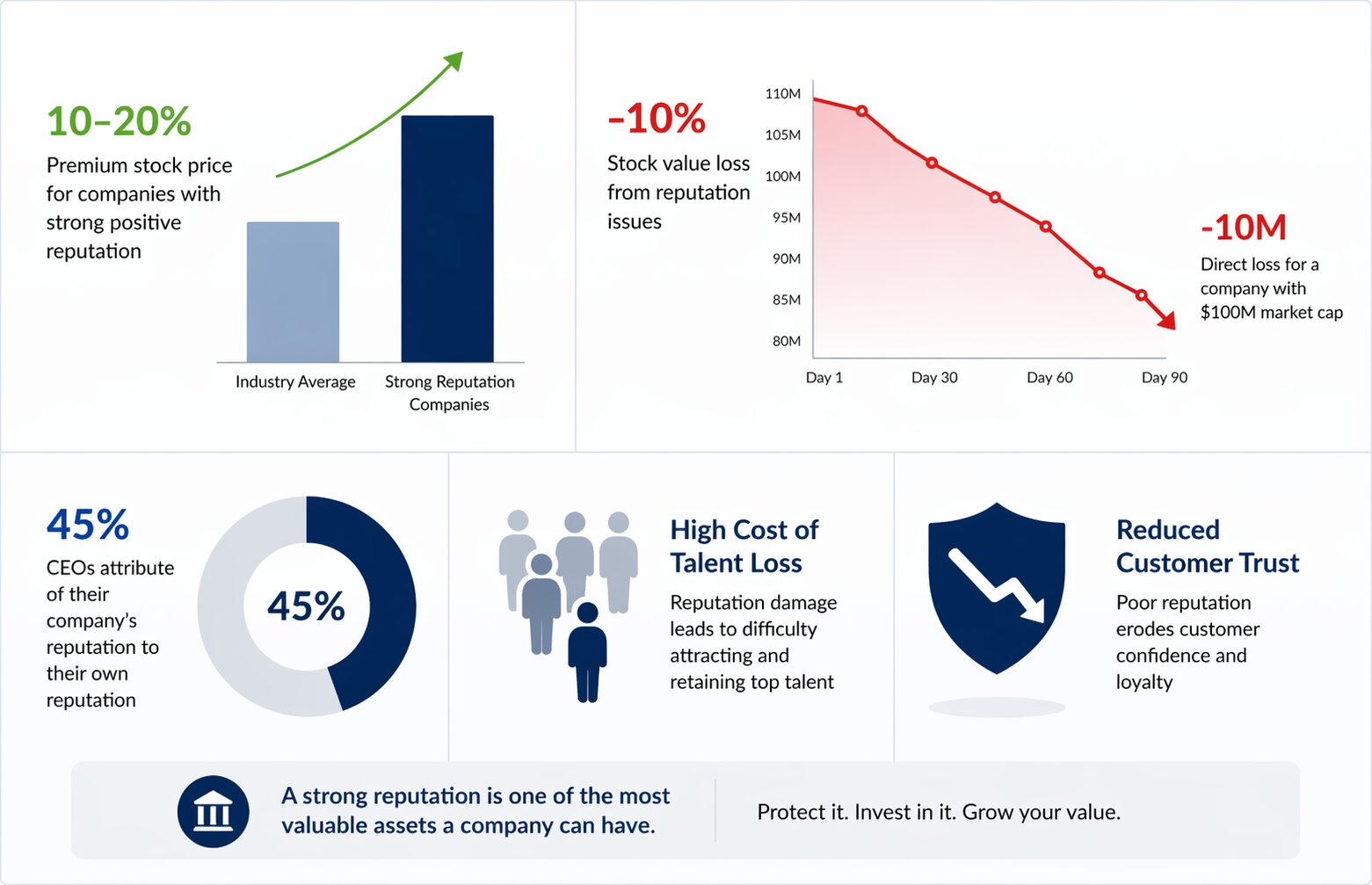
Neglecting CEO reputation management can be costly. To better evaluate impact, explore how to measure reputational risk. Consider this: companies with a strong positive reputation can command a 10–20% premium over their peers’ stock prices. In contrast, a bad reputation can lead to plummeting stock prices, loss of talent, and reduced customer trust. A strong reputation is one of the most valuable assets a company can have.
Let’s quantify this. If you’re the chief executive officer of a mid-sized company with a market cap of $100 million, a 10% loss in stock value due to reputation issues means a direct loss of $10 million. If a CEO neglects their digital presence or fails to manage public perception effectively, they risk alienating investors and key stakeholders. CEOs collectively attribute 45% of their company’s reputation to their own reputation, underscoring the personal stake involved.
Note: Prices are just examples and may not reflect actual costs.
Recognizing Decision Tension and Urgency
Every day you delay implementing a proactive CEO reputation management strategy increases the risks. A competitor might seize the opportunity to position itself more favorably in the public’s and investors’ eyes. Look at Johnson & Johnson; after the Tylenol crisis, its immediate, transparent response helped it regain consumer trust, demonstrating how acting quickly can mitigate damage.
In contrast, think about the numerous CEOs who chose to remain silent during crises. For instance, Uber’s former CEO, Travis Kalanick, responded slowly to allegations of workplace harassment, leading to a massive social media backlash and ultimately his departure. To understand the impact, explore why your reputation is important. The lesson here is straightforward: waiting isn’t an option in today’s fast-paced digital world. A proactive approach to reputation management is a critical component for any CEO.
Common Misconceptions About Reputation Management
Isn’t it just a PR gimmick?
Many leaders dismiss reputation management as mere PR fluff. However, it’s so much more. A strong CEO reputation enhances personal credibility and fosters trust among employees, investors, and customers, which is essential for achieving business goals and improving brand perception. Authenticity and direct engagement are more valuable than a polished corporate facade in 2025.
Can’t I rely solely on my company’s brand?
While a company’s brand is vital, a CEO’s personal brand significantly influences public perception. Your leadership style and decisions shape how stakeholders view the company. Ignoring this connection risks undermining the overall corporate reputation. Your personal reputation and the company’s brand image are tied together, making alignment a critical business asset.
Isn’t managing my digital presence time-consuming?
It doesn’t have to be. With a proactive communication strategy, you can efficiently monitor and manage your digital footprint to protect your online image. To strengthen your approach, explore this ultimate guide to repairing your online reputation and building a positive digital presence. Utilizing tools like Google Alerts and social media management platforms can streamline the process, ensuring your reputation remains intact without overwhelming your schedule. CEOs often find it challenging to balance their responsibilities with reputation management, but delegating to dedicated teams or external experts helps overcome this hurdle.
Steps to Effective CEO Reputation Management
Implementing a solid reputation management strategy involves several actionable steps:
- Develop a Personal Brand – Define what you stand for as a leader. Your personal values should align with your company’s mission and business practices to ensure consistent messaging. Establishing yourself as a thought leader on platforms like LinkedIn is essential.
- Engage on Social Media – Use platforms like LinkedIn and Twitter to share industry insights and thought-leadership articles, and connect with your audience to shape public perception effectively. A relatable tone rather than corporate language helps build connections with key stakeholders.
- Monitor Your Digital Presence and Digital Footprint – Regularly check your digital footprint using monitoring services and social listening tools to stay ahead of potential reputation crises and track media mentions across news outlets and industry publications. Continuous online monitoring is essential for building trust and controlling narratives. Media monitoring services track what established news outlets are saying about a CEO, which is crucial for understanding their official narrative in the press. Using analytics tools to track key metrics over time can help CEOs measure the impact of their reputation management efforts. Sentiment analysis tools provide insights into public opinion, while a reputation audit helps identify gaps between desired and actual reputation.
- Be Transparent and develop a Crisis Communication Plan – Address negative news stories head-on. A well-crafted crisis communication plan can minimize damage and help maintain a positive narrative. Maintaining a single source of truth during a crisis helps prevent misinformation. Crisis response must be swift and transparent to maintain trust.
- Foster Relationships with Key Stakeholders – Build strong media relations and professional networks, maintaining open lines of communication to encourage meaningful conversations and gather stakeholder feedback. Internal communications are a valuable tool for keeping employees informed and aligned.
- Establish a Personal Website – Having a designated professional hub helps maintain control over your digital presence and serves as a platform for your thought leadership and personal brand.
Developing a Robust Communication Strategy
A comprehensive communication strategy is fundamental to effective CEO reputation management. To better understand this connection, explore image and reputation. It ensures that all messaging is aligned, consistent, and tailored to resonate with diverse audiences across multiple channels. By integrating clear, authentic communication practices, CEOs can build trust, clarify their vision, and maintain positive engagement with employees, investors, customers, and the media.

Developing a Crisis Communication Plan
A well-prepared crisis communication plan is essential for CEOs to respond swiftly and transparently during challenging situations. This plan outlines clear protocols and messaging strategies to maintain trust and minimize reputational damage in the event of a crisis. Proactive crisis preparedness ensures that a CEO can manage negative narratives effectively and protect both personal and company brand value.
Engaging Key Stakeholders for Reputation Success
Building and maintaining strong relationships with key stakeholders—including employees, investors, customers, and the media—is vital for a CEO’s reputation management. To support this effort, explore reputation insurance. Open and consistent communication fosters trust, encourages meaningful dialogue, and creates a network of advocates who support the CEO and the company through both successes and challenges. Engaged stakeholders are instrumental in amplifying positive messages and mitigating potential reputation risks.
Monitoring and Managing Your Digital Footprint
A CEO’s digital footprint encompasses all online content and interactions that shape public perception. Regularly monitoring this footprint using social listening tools and media tracking platforms enables early detection of potential issues and opportunities to highlight positive achievements. Managing your digital footprint proactively helps maintain a favorable online presence that aligns with your leadership brand, attracts top talent, and reflects company values.

Crafting Consistent Messaging to Reinforce Brand Image
Consistent messaging is key to strengthening both the CEO’s brand and the company’s brand image. To deepen your understanding, explore how every CEO can embrace the power of reputation metrics. When a CEO communicates regularly and uniformly across platforms, it eliminates confusion and builds a reliable narrative that stakeholders can trust. This consistency reinforces the organization’s values and vision, creating a cohesive identity that supports long-term reputation resilience.
Building Momentum for Action
The time to act is now. You can’t afford to be complacent when it comes to your reputation. Implementing effective reputation management strategies not only protects your personal brand but also enhances your company’s value and long-term success.
If you want to apply this without trial and error, book a call with our experts today. Taking that step can help you establish a proactive approach, ensuring your reputation aligns with your business goals and that you leverage valuable insights from employee feedback and media coverage.
FAQs About CEO Reputation Management
Q1: What is CEO reputation management?
CEO reputation management is the process of shaping and maintaining how a chief executive officer is perceived by the public, stakeholders, and media. It includes managing digital presence, social media activity, press coverage, and overall public relations to build a strong and credible executive image.
Q2: How does a CEO’s reputation affect a company’s success?
A CEO’s reputation directly influences investor confidence, employee morale, and customer trust. A well-respected executive can strengthen brand perception, attract top talent, and drive business growth, while a negative reputation can lead to lost opportunities and reduced confidence across stakeholders.
Q3: What are some effective CEO reputation management strategies?
Key strategies include actively engaging with audiences on social media, maintaining transparency during crises, monitoring online mentions, and aligning messaging with company values. Regular content publishing builds authority, while SEO helps ensure positive content dominates search results. Having a clear crisis communication plan is also essential for protecting and strengthening a CEO’s reputation.