What You’ll Learn:
- The most influential online review sites for local service businesses and how they affect trust and visibility.
- Practical ways to monitor reviews, respond to negative feedback, and turn recurring issues into improvements.
- Policy-compliant methods for collecting honest customer reviews and choosing the platforms that fit your business.
Consumers rely on online reviews when choosing local service providers, comparing products, and evaluating unfamiliar companies. That makes your review presence a business asset that needs consistent attention. Without active monitoring or effective review management, unanswered complaints, outdated profiles, and suspicious feedback can cost trust and customers. This guide compares ten leading online review sites and explains how to use them responsibly.
Why Your Business Must Prioritize Online Reviews
Online reviews are powerful trust signals that influence consumer decisions. They help people compare service quality, reliability, communication, and value before making contact. Recent feedback can also show whether a business has improved or whether the same problems continue.
Positive, recent reviews make it easier for prospective customers to choose your business over competitors. Neglecting negative feedback can damage trust and revenue. Review platforms give consumers a quick way to assess reliability and service quality, making a steady flow of authentic feedback essential for local service providers.
Understanding Website Review Sites and Business Review Platforms
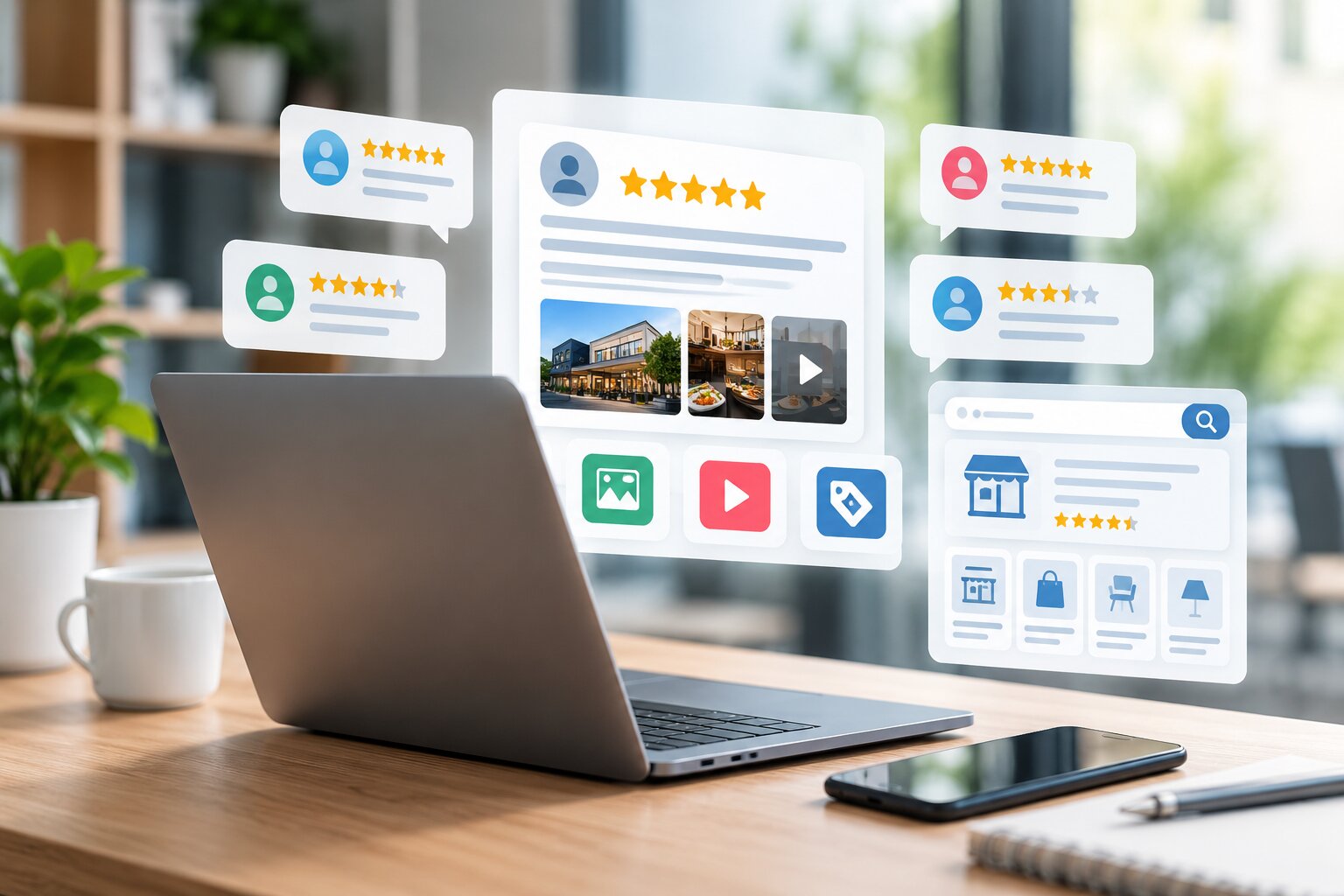
Website review sites and business review platforms are channels where customers share experiences and rate businesses. That feedback shapes your online reputation and search visibility. Managing your presence on key online reputation websites helps new clients evaluate your business. Complete listings with accurate details, photos, and video also give customers more useful information before they contact you.
Key Review Platforms to Leverage
Use the platforms that match where your customers already research and compare providers. The table below summarizes ten influential options.
| Review site | Strengths | Limitations |
|---|---|---|
| Google Business Profile | High visibility in Google Search and Maps | Negative reviews require timely, careful responses |
| Yelp | Strong local-service audience and active users | Strict filtering and review policies |
| Large audience and recommendations tied to profiles | Feedback may be less detailed | |
| Better Business Bureau | Strong credibility and complaint-resolution process | Less consumer traffic than major search platforms |
| Angi | Focused on home services and local contractors | Paid access or lead costs may limit value |
| Trustpilot | Detailed feedback for consumer and ecommerce brands | Often less relevant to local service businesses |
| HomeAdvisor | Lead generation for home-service companies | Lead costs can be substantial |
| Thumbtack | Connects customers with local service providers | Lead fees can accumulate |
| Google Seller Ratings | Can support eligible advertisers and ecommerce brands | Only available to qualifying business types |
| Amazon Reviews | Highly visible for consumer products | Usually irrelevant for service-only businesses |
The Consequences of Ignoring Reviews and Fake Feedback
Review management is not limited to chasing a higher average rating. It also includes correcting inaccurate profile information, identifying recurring service problems, escalating threats or harassment, and preserving records when a review may violate platform rules.
Ignoring online reviews allows unanswered complaints and misleading feedback to shape public perception. Fake reviews, whether overly positive or maliciously negative, can undermine credibility across review sites. Many platforms use automated and manual systems to detect manipulation, but businesses still need active monitoring, documented escalation procedures, and prompt responses. Verified-purchase systems can add useful context, although no badge replaces careful review analysis.
Transforming Negative Reviews into Growth Opportunities
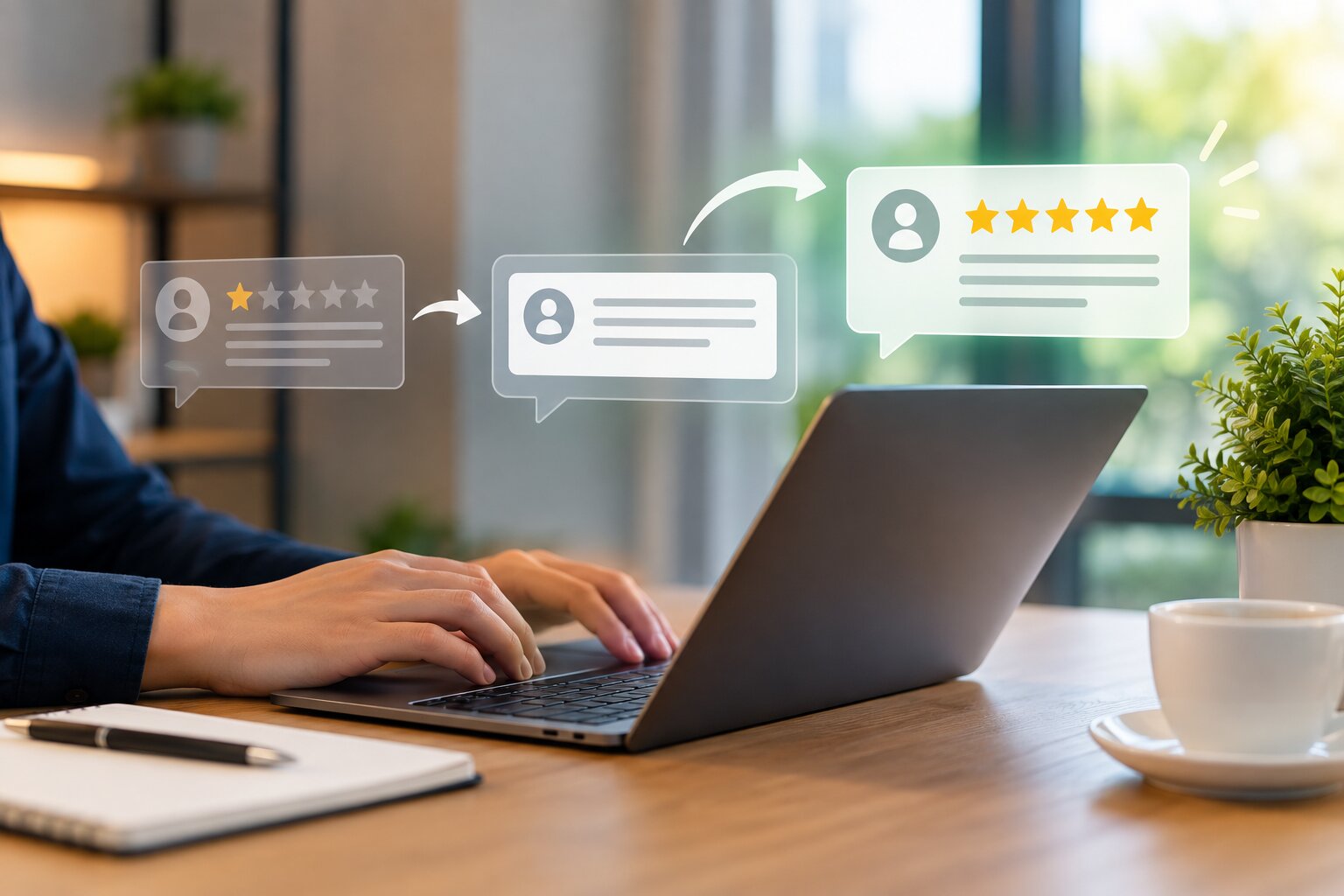
Negative feedback is inevitable. What matters is the response. A prompt, calm reply that acknowledges the customer’s experience and offers a practical next step can rebuild trust. Avoid arguing in public or exposing personal information. Move account-specific details to a private channel, resolve the underlying problem, and use recurring complaints to improve operations. These actions show prospective customers that the business takes service seriously.
Effective Review Collection Strategies
Consistent review collection is a core part of strong online reputation management strategies. Send a short post-service email or text with a direct link to the appropriate review profile, train staff to make neutral requests, and invite feedback from all customers rather than selecting only satisfied ones. Never offer payment, discounts, free goods, or services in exchange for a review. Google identifies those incentives as prohibited fake engagement in its official review guidance.
A simple workflow should assign responsibility for monitoring, set response-time goals, and track recurring themes. Review-management tools can automate outreach and alerts, but every response should still sound human and reflect the facts of the customer’s experience.
Leveraging Facebook Reviews and Angi
Do not assume every platform deserves equal attention. A home-services company may gain more from Google, Angi, and BBB, while a restaurant may prioritize Google, Yelp, and Facebook. Software companies often rely more heavily on G2 or Capterra, and hospitality brands may need TripAdvisor.
Facebook recommendations reach a broad social audience and are connected to user profiles, which can add context and extend visibility. Angi focuses on home services and connects homeowners with local contractors. Both platforms can be useful when they align with your industry and customer journey. Focus on complete, accurate profiles instead of spreading resources across every available site.
Better Business Bureau: Establishing Trust and Authority
The Better Business Bureau combines business profiles, customer reviews, and a formal complaint process. Although it may receive less traffic than Google or Facebook, a well-maintained BBB profile can reinforce trust in industries where credibility matters. Include BBB monitoring in your broader reputation management strategy, respond to complaints with clear documentation, and avoid presenting accreditation or ratings in a misleading way.
Next Steps to Strengthen Your Online Reputation
Create a short inventory that records every active profile, login owner, notification address, profile URL, category, and response responsibility. This prevents abandoned listings and makes it easier to keep names, addresses, phone numbers, hours, and service descriptions consistent.
Start by claiming or confirming profiles on the review sites most relevant to your customers. Standardize business details, create a compliant review-request process, and respond to feedback promptly. Track review volume, recency, response time, rating trends, and recurring topics instead of judging performance by star rating alone. If your team needs help building the process, request a consultation.
Building a More Resilient Online Reputation
Understanding online reputation across business review platforms is essential for local, service, product, and experience-based companies. Use the platforms your customers trust, request honest feedback without pressure, respond consistently, and investigate suspicious patterns. A focused system creates better customer insight while strengthening search visibility and long-term credibility.
Frequently Asked Questions
What is the most important review platform for local service businesses?
Google Business Profile is usually the first priority because reviews appear with the business in Google Search and Maps. The best mix still depends on industry and customer behavior.
How can I manage negative reviews effectively?
Respond promptly and professionally, acknowledge the concern, offer a practical next step, and move account-specific details to a private channel. Record recurring issues so the business can address their root causes.
Should I offer incentives for customers to leave reviews?
No. Major platforms, including Google, prohibit reviews exchanged for payment, discounts, free goods, or services. Ask every eligible customer for honest feedback without trying to influence the rating or wording.
Why is customer feedback vital for my business?
Customer feedback reveals what clients value and where the service falls short. Reviewing patterns across many comments helps teams improve operations, communication, and customer experience.
Are Amazon reviews relevant for service businesses?
Amazon reviews mainly matter to product sellers. A service-only company should normally focus on Google, Facebook, BBB, Yelp, or an industry-specific platform used by its customers.
What distinguishes product reviews from customer reviews?
Product reviews evaluate a specific item, while customer reviews often cover the broader experience with a company, including service, communication, delivery, and support.
Why is review volume and recency important?
A continuing stream of recent reviews gives customers a more current and representative picture than a small set of old comments. Volume should be earned through a consistent, policy-compliant request process.
Are there specialized review platforms for software and B2B companies?
Yes. Platforms such as G2 and Capterra focus on software and B2B evaluations. Companies should prioritize the sites their buyers actually consult during research and procurement.
What are the benefits of verified reviews?
Verification can show that a reviewer completed a purchase or transaction, adding context and making manipulation harder. It does not guarantee that every opinion is accurate, so patterns still matter.
How can businesses use review-management analytics?
Track rating trends, review volume, recency, response time, sentiment, and recurring topics. Use those findings to improve service, train teams, and measure whether operational changes reduce repeated complaints.
How do platforms like Trustpilot and Sitejabber differ?
Both platforms collect consumer feedback, but their audiences and industry coverage differ. Trustpilot serves a broad mix of consumer brands, while Sitejabber is often associated with online retailers and digital services. Review the audience, moderation policies, and profile features before investing in either platform.
How do Yelp and TripAdvisor influence consumer choices?
Yelp is widely used for restaurants and local service businesses, while TripAdvisor is especially relevant to travel, hospitality, attractions, and experiences. A business should prioritize the platform that appears most often during its customers’ actual research process.
What tools help monitor website safety and reputation?
Google Safe Browsing can flag known security threats, while services such as ScamAdviser and community-rating tools provide additional signals. Treat third-party scores as clues rather than final proof, and investigate the underlying evidence before drawing conclusions.
How does responding to reviews benefit my business?
Responses show that the business listens and takes customer experience seriously. They also give prospective customers context about how problems are handled. A useful reply is specific, respectful, privacy-conscious, and focused on a practical resolution.
How do review platforms support experience-based businesses?
Travel and activity platforms can show prospective customers what a real visit or service feels like. Detailed feedback about communication, timing, staff, accessibility, and overall experience helps buyers compare options and helps operators identify recurring opportunities.
What role does review syndication play for ecommerce brands?
Review syndication distributes eligible product feedback across approved retail and marketplace destinations. It can expand the reach of authentic customer content, but merchants should confirm platform rules, attribution, verification standards, and duplicate-content handling.
Why is it important to critically evaluate customer reviews?
Individual reviews can be incomplete, biased, outdated, or unrelated to the current business. Look for patterns across many recent reviews, compare multiple platforms, examine how the company responds, and distinguish a recurring operational issue from an isolated disagreement.
What value does Facebook's audience add to reviews?
Facebook recommendations can reach people through profiles, local groups, and social connections. That context may add credibility, but businesses should still monitor for spam, respond professionally, and avoid relying on one social network as the only source of customer feedback.
What value do ResellerRatings and ConsumerAffairs provide?
ResellerRatings focuses on merchants and online stores, while ConsumerAffairs covers many larger brands and service providers. Their usefulness depends on your industry, customer demographics, profile visibility, and whether prospective buyers consult them before purchasing.
How do reviews contribute to SEO?
Reviews can add fresh language about products, services, locations, and customer experiences. They also influence how people evaluate search results. Reviews are only one signal, so combine them with accurate listings, useful site content, technical SEO, and strong customer service.
Why is Google Business Profile crucial for local visibility?
A complete Google Business Profile helps eligible local businesses appear in Search and Maps with hours, location or service area, photos, and reviews. Keep the profile accurate and follow Google’s guidelines rather than trying to manipulate rankings or ratings.
How does Yelp's review filter affect a business profile?
Yelp uses automated systems to recommend some reviews and place others in a separate area. Businesses should not attempt to bypass that process. Focus on genuine customer experiences, avoid review gating, and respond to visible feedback consistently.
Why should businesses monitor review patterns?
Patterns reveal more than isolated comments. Group feedback by service, location, team, timing, or complaint type; then compare changes over time. Repeated themes can guide training, process improvements, product decisions, and clearer customer communication.
How do review platforms affect visibility in AI-generated answers?
Public reviews can contribute to the information available about a brand, but no review count or star rating guarantees inclusion in an AI-generated answer. Maintain accurate profiles, earn recent authentic feedback, and build corroborating information across trusted sources.
What is the role of Google Safe Browsing?
Google Safe Browsing helps identify sites associated with malware, phishing, or other unsafe behavior. Security warnings can damage customer trust, so maintain the website, monitor Search Console and security tools, and investigate warnings promptly.
How should a business choose between general and industry-specific review sites?
Start with the general platforms customers already use, then add one or two industry-specific sites that influence purchase decisions. Compare audience fit, profile visibility, moderation quality, cost, lead terms, and the time required to manage each channel.
What should I do about a review that appears fake?
Document the review, check it against customer records without revealing private information, and report it through the platform’s official process when it violates policy. Post a calm public response if appropriate, but avoid accusations you cannot substantiate.
How often should a business check its review profiles?
High-volume businesses may need daily monitoring, while smaller companies can use alerts and a scheduled weekly review. The important point is to set a clear owner and response target so urgent complaints or policy violations do not sit unnoticed.