What You’ll Learn:
- The critical role of hospitality reputation management in enhancing guest satisfaction and driving direct revenue.
- Effective strategies for monitoring, responding to, and leveraging guest feedback using online reputation management tools.
- How integrating technology and fostering a guest-centric culture can protect and grow your hotel’s brand in a competitive market.
Imagine waking up one day to discover your hotel’s online reputation has plummeted due to a few negative reviews. According to a BrightLocal study, 87% of consumers read online reviews for local businesses, and 73% trust a business more if it has positive reviews. This stark reality underscores the importance of effective hospitality review management, which can significantly influence guest satisfaction and your bottom line.
The Importance of Online Reputation
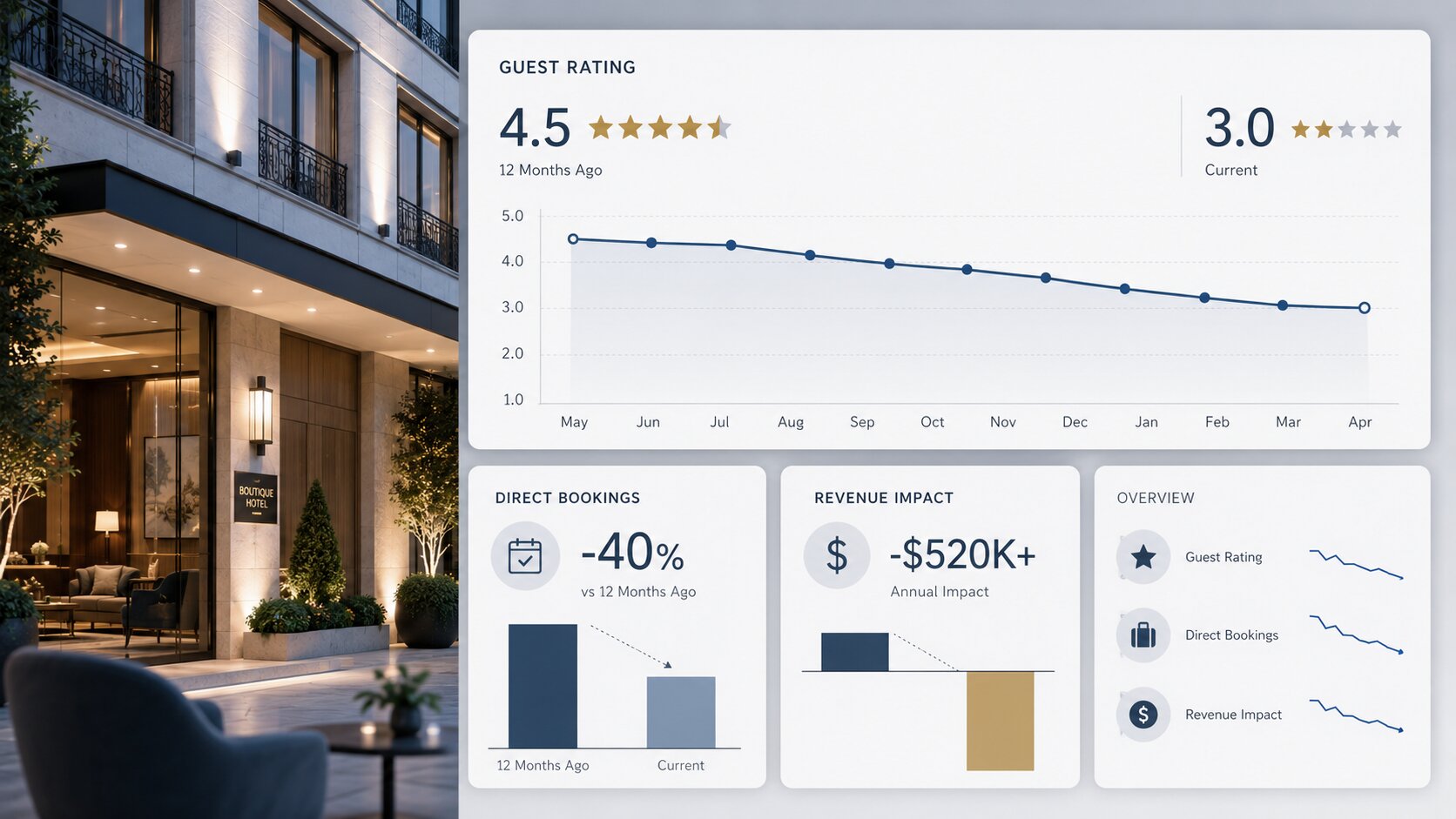
Your hotel’s online reputation is more than a collection of guest reviews. It’s your brand’s identity in the digital space. Poor online reputation management can lead to lost revenue, decreased bookings, and a tarnished brand image. Consider a boutique hotel in New York that ignored its negative reviews for months. With their average rating dropping from 4.5 to 3.0 stars on Google Reviews, they experienced a 40% decrease in direct bookings, resulting in an annual revenue loss exceeding $500,000.
Note: Prices are just examples and may not reflect actual costs.
Factors Influencing Guest Choice
Potential guests often seek more than a clean room and a friendly smile. They look for reassurance through reviews and ratings. If your hotel’s online presence is riddled with negative feedback, you risk losing not just bookings but also brand loyalty. On the flip side, actively managing your online reputation can transform a mediocre customer experience into a memorable one, turning first-time visitors into repeat customers. Additionally, the hotel’s location and proximity to popular local attractions play a significant role in guest decisions, making it essential to highlight these features in your online reputation management strategy.
Guest Satisfaction
Guest satisfaction is the foundation of a strong hospitality reputation. It reflects how well your hotel meets or exceeds guest expectations throughout their stay. Satisfied guests are more likely to leave positive reviews, recommend your hotel to others, and become loyal customers. Monitoring guest satisfaction through surveys and reviews helps you identify what delights your guests and where improvements are necessary to protect your online reputation. Just as patient trust shapes a medical practice’s healthcare reputation, keeping your guests happy is the ultimate key to your hotel’s long-term success.
Guest Experience
The customer experience encompasses every interaction a guest has with your hotel, from booking to check-out and beyond. Enhancing this experience requires attention to detail, personalized service, and seamless operations. A positive guest experience leads to higher review scores and strengthens your hotel’s online reputation, encouraging repeat visits and direct bookings through effective reputation management.
Guest Data
Collecting and managing guest data is crucial for understanding your guests’ preferences and behaviors. This data includes feedback, booking history, and interaction records. Analyzing guest data allows hotels to tailor services, personalize communication, and anticipate guest needs, thereby improving satisfaction and loyalty. Integrating reputation management practices into data analysis ensures a comprehensive approach to maintaining a strong online reputation and brand image.
Actionable Insights
Turning guest data and feedback into actionable insights enables hotels to make informed decisions. By identifying trends in customer sentiment and pinpointing areas for improvement, you can implement targeted strategies to enhance service quality. These insights help optimize operations, increase guest satisfaction, and boost your hotel’s online reputation. Utilizing reputation management tools to gather and analyze this information is key to sustained success—and a great place to start is to check your online presence for free to see exactly where your business stands today.
Monitor Reviews Regularly
Use reputation management software to track reviews across platforms like Google, TripAdvisor, and Yelp. This allows for timely responses and adjustments based on guest feedback. Monitoring guest reviews and customer sentiment in real time ensures you can address issues promptly and maintain a positive reputation. Hotels should aim to respond to all reviews within 24 to 48 hours, as timely responses are expected by up to 90% of guests and can significantly improve guest loyalty.
Encourage Positive Feedback
After a guest’s stay, send a follow-up email inviting them to leave a review. This simple act can significantly boost your volume of positive online reviews. Encouraging more reviews helps improve your hotel’s reputation and increases direct bookings by building trust with potential guests. Automating reminders can enhance the volume of organic reviews, which is vital for maintaining a strong online presence.
Respond to All Reviews
Whether praise or criticism, responding to guest reviews shows you value their feedback. A personalized response can turn a negative experience into a positive one and may sway potential guests. Consistent and thoughtful review responses are key to maintaining excellent customer service and enhancing guest satisfaction. Hotels that actively respond to reviews often see increased bookings, higher revenue, and a significant boost to their overall reputation.
Customer Relationship Management
Integrating customer relationship management (CRM) systems with reputation management tools allows hotels to personalize communication and marketing based on guest preferences and feedback. A robust CRM supports better guest interactions, enhances loyalty, and enables targeted campaigns that improve guest satisfaction and drive direct bookings.

Use Guest Feedback for Improvement
Analyze feedback for common themes. If guests mention issues with cleanliness or service quality, take immediate action to address these concerns. Leveraging guest data and sentiment analysis provides actionable insights that help refine operations and exceed guest expectations.
The Power of Guest Reviews
Guest reviews are a vital component of hospitality credibility management. They provide authentic insights into the guest experience and influence potential travelers’ booking decisions. Encouraging and effectively managing guest reviews and online reviews helps build trust and enhance your hotel’s reputation in a competitive market. Research shows that 83% of people trust recommendations from friends and guest reviews, making these testimonials crucial for your hotel’s success. Online reviews remain one of the most influential factors for travelers when choosing accommodations, and you can leverage this user feedback to unlock the power of local SEO and business listings to grow fast, ensuring your hotel ranks at the top of local search results.
Effective Hotel Reputation Management Strategies
Effective hotel reputation management involves proactive monitoring, timely responses, and leveraging guest feedback to improve services. Utilizing a reputation management system and hotel reputation management software can streamline these processes, enabling hotels to stay ahead in meeting guest expectations and maintaining a positive brand reputation. Currently, only about 42% of hotels have integrated such reputation management solutions, highlighting an opportunity to gain a competitive edge.
Protecting and Enhancing Your Hotel’s Reputation
Your hotel’s reputation is a key asset that impacts direct bookings and revenue growth. Consistently managing online reviews, social media accounts, and your hotel website ensures that your brand image reflects exceptional service and meets guest expectations. A strong reputation also differentiates your property in a crowded marketplace.
Analyzing Guest Sentiment for Continuous Improvement
Understanding guest sentiment through review management and customer feedback analysis helps identify strengths and areas for improvement. Using a customer experience platform to track sentiment trends enables hotels to tailor their services, refine their review strategy, and deliver personalized experiences that foster loyalty and positive word of mouth. For a deeper dive into modern strategies for analyzing this data, explore “Sentiment Analysis for Customer Service: The Complete 2025 Guide to Transforming Support Teams,” which provides highly effective frameworks for turning raw emotional data into better guest interactions.
Train Staff on Customer Service
Your frontline staff are brand ambassadors. Implement regular training sessions on service quality and guest engagement to ensure exceptional experiences. A well-trained team directly contributes to a positive guest experience and strengthens your hotel’s reputation.
Using Technology for Better Management
In the digital age, relying on reputation management tools is essential. A user-friendly interface can simplify tracking reviews, analyzing guest sentiment, and responding promptly. Opt for software that consolidates feedback from multiple review sites into one central location, making online reputation management easier. Integrating these tools with your customer relationship management system can enhance guest communication and personalize marketing efforts. Higher ratings also improve organic visibility in search algorithms of OTAs, further boosting bookings. Effective online reputation management enables hotels to maintain a competitive edge and foster guest trust.
Selecting the Right Tools
When choosing a reputation management solution, consider the following:
- Integration capabilities with your existing systems
- Analytics features for actionable insights
- Customer support and training options
Leveraging Digital Marketing to Drive Direct Bookings
Digital marketing plays a crucial role in amplifying your hotel’s reputation and attracting potential guests. By showcasing positive guest reviews and promoting your brand through social media and targeted campaigns, you can increase visibility and drive direct bookings. A strong online presence combined with an effective social media strategy creates a powerful synergy that boosts revenue, making it essential to align your online reputation management & digital marketing efforts. Highlighting your hotel’s location and nearby local attractions in marketing materials can also attract more guests.

The Consequences of Inaction
The hospitality industry is competitive, and failing to manage your hotel’s online reputation can lead to dire consequences. A study found that hotels with a 1-star increase in ratings could see a 30% boost in revenue. Ignoring negative feedback can result in losing potential guests and a significant decline in direct bookings. Over time, this can lead to a loss of market share, forcing you to compete on price rather than value. To protect your brand, implementing proven hotel reputation management tips is essential for maintaining a positive digital footprint and securing long-term growth.
Fostering a Guest-Centric Culture
Building a positive online reputation starts with fostering a guest-centric culture within your hotel. This means prioritizing guest experience and satisfaction at every touchpoint of the guest journey. Here are some ways to enhance guest engagement:
- Personalized Experiences – Know your guests’ preferences and cater to them. For instance, if a guest celebrates a birthday, surprise them with a complimentary dessert.
- Utilize Social Media – Engage with guests on social media platforms. Share user-generated content and respond to comments and messages promptly.
- Implement Post-Stay Surveys – After a guest checks out, send a brief survey to gather meaningful feedback on their stay. Use this data to make informed improvements.
- Mid-Stay Check-Ins – Conduct mid-stay check-ins to resolve any issues before guests leave, enhancing satisfaction and reducing negative reviews.
Take Action to Secure Your Hotel’s Future
Now’s the time to take control of your hotel’s reputation. Delaying action can lead to lost opportunities and further damage to your brand. By adopting effective hotel reputation management practices, including a crisis communication plan for emergencies, you can enhance guest satisfaction, improve your online presence, and ultimately drive direct bookings.
If you want to apply these insights without trial and error, consider implementing a tailored reputation management solution. The right software can streamline processes, allowing you to focus on what you do best to provide excellent service.
FAQs About Hospitality Reputation Management
Q1: What is hospitality reputation management?
Hospitality reputation management is the process of monitoring, managing, and improving how a hotel or hospitality business is perceived online. It involves collecting guest feedback, managing reviews, responding to customer comments, and enhancing the overall guest experience to strengthen brand trust and visibility.
Q2: How can I encourage guests to leave positive reviews?
One of the most effective methods is sending a personalized follow-up message after a guest’s stay. Thank them for their visit and provide a direct link to your preferred review platforms, making it simple and convenient for satisfied guests to share their experiences.
Q3: What should I do if I receive negative feedback?
Respond quickly, professionally, and empathetically. Acknowledge the guest’s concerns, apologize when appropriate, and explain the steps being taken to resolve the issue. Thoughtful responses demonstrate a commitment to guest satisfaction and can positively influence future booking decisions.
Q4: How can technology help with reputation management?
Reputation management software can centralize reviews from multiple platforms, track guest sentiment, automate monitoring, and provide actionable insights. These tools help hospitality businesses identify trends, improve service quality, and respond more efficiently to guest feedback.
Q5: What impact does online reputation have on hotel revenue?
A strong online reputation can directly influence occupancy rates, booking volume, and pricing power. Hotels with consistently positive reviews and strong ratings often attract more guests, generate more direct bookings, and can command higher room rates than competitors with weaker reputations.