

- Learn how to assess your current online reputation, identify harmful content, and understand how your digital footprint shapes public perception.
- Discover proven strategies to remove, suppress, and manage negative content while strengthening your presence through SEO, reviews, and brand mentions.
- Explore proactive ways to build and maintain a positive online image—and know when professional reputation management services can accelerate results.
Is negative online content damaging your reputation? Don’t worry, we’ve got you covered. This article dives into effective strategies for reputation repair online. We’ll help you assess your current standing, address harmful content, and build a positive digital presence. Let’s get started on repairing your online reputation.
The Importance of a Positive Online Reputation

A strong online reputation is more than just a digital nicety; it’s a cornerstone of success. It influences consumer trust and purchasing decisions, making it a critical factor for both individuals and businesses. Imagine you’re choosing between two companies: one with glowing reviews and another with numerous negative comments and a bad reputation. Which one would you trust with your hard-earned money? A strong personal reputation and online reputations can make all the difference.
Effective reputation management can create a favorable brand reputation that encourages customer loyalty and repeat business. This positive online presence not only helps in attracting new customers but also in retaining the existing ones. In a marketplace crowded with options, having a good online reputation provides a competitive advantage. It makes you stand out, often tipping the scales in your favor, contributing to a positive reputation.
Moreover, search engines are often the first place potential employers and customers check before making decisions. A positive online presence enhances your digital footprint, making you more visible and appealing to those searching for your services or expertise through people search. The first page of search engines serves as a digital storefront that shapes first impressions, so ensuring it reflects a positive image is crucial.
Understanding Your Digital Footprint

In today’s digital world, your digital footprint is the sum of everything you leave behind online—social media profiles, online reviews, search results, and all other digital content associated with your name or business. This digital footprint shapes your online reputation, influencing how others perceive you both personally and professionally. A positive online presence can lead to new opportunities, while a negative online reputation can create obstacles in your career, relationships, or business growth.
Managing your digital footprint means being aware of what information is available about you online and taking proactive steps to ensure it reflects your best self. This includes regularly monitoring your search results, reviewing your social media profiles, and keeping track of online reviews. If you discover negative content or negative search results, it’s important to address them quickly—either by creating positive content to improve your reputation or by seeking comprehensive reputation management services for more complex issues.
By actively managing your digital footprint, you can build a positive online presence that supports your goals and protects your reputation. Remember, every post, comment, and review contributes to your overall online image, so make each interaction count.
Assessing Your Current Online Reputation
Before you can improve your online reputation, you need to understand where you currently stand. Your online reputation consists of various elements, including:
- Search engine results
- Social media profiles
- Online reviews
- Other types of digital content
These elements collectively shape how you’re perceived online, making it essential to conduct a thorough audit of your online presence.
Start by Googling yourself or your business. Check what appears on the first few pages of search results. Are there any negative reviews or outdated information? Next, review your social media sites and profiles. Ensure that your information is current and that your posts reflect your desired image. Monitoring review sites and setting up alerts for brand mentions can also help you stay on top of your online reputation.
Assessing negative information is a crucial part of this audit. Consider the source and the level of damage each piece of content might cause. This will help you prioritize what needs immediate attention. Being aware of your online presence allows you to develop and manage your reputation more effectively, addressing negative feedback and reinforcing positive aspects.
Identifying and Addressing Negative Content
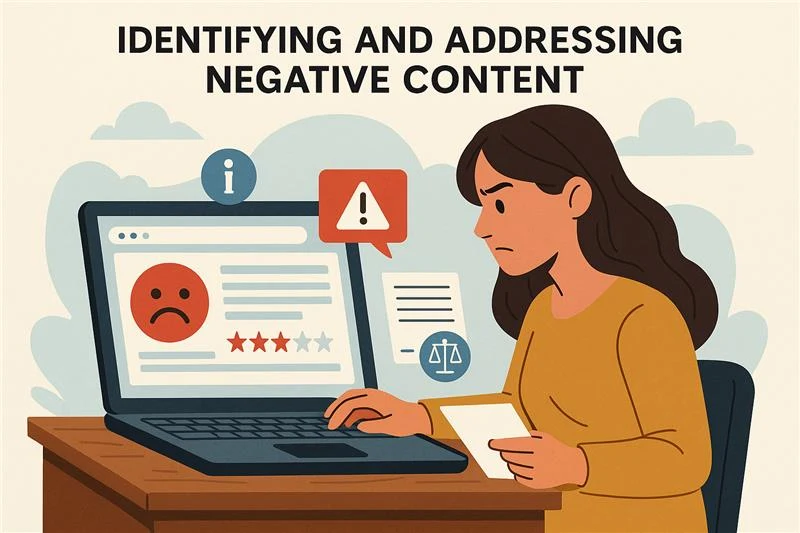
Identifying and addressing negative content is the first step in online reputation repair. Negative content can significantly harm your online reputation, making it imperative to take swift action. The process involves removing negative elements and replacing them with positive ones, which is a crucial aspect of online reputation management. Removing negative content is a crucial step in protecting and improving your online reputation. Additionally, it is essential to remove negative content to enhance your overall reputation.
Finding harmful content is the starting point. Tools like Google Alerts and Mention can help track online mentions of your name or brand, allowing for early detection of negative content. Once you’ve identified the harmful content, the next step is contacting website owners for removal. Reaching out politely and explaining how the content is inaccurate or defamatory can often lead to its removal.
If the content is defamatory and the website owner is unresponsive, legal action may be necessary. Consulting an experienced internet defamation attorney can help you assess the strength of your case and take appropriate steps. This multi-faceted approach ensures that you address the root cause of a negative online reputation and take comprehensive steps to repair it.
Finding Harmful Content
Finding harmful content early can prevent issues from escalating. Monitoring online mentions plays an essential role in sustaining a favorable online reputation. It helps ensure that any negative feedback is promptly addressed. Tools like Google Alerts can notify you whenever your name or brand is mentioned online, allowing you to address negative content before it gains traction.
Additionally, using tools like Mention can help track mentions beyond Google, providing a more comprehensive view of your online reputation. The early detection of negative content allows you to take swift action, whether it’s reaching out for content removal or creating positive content to suppress negative mentions.
Contacting Website Owners for Removal
When contacting website owners for content removal, a polite and evidence-based approach is most effective. Follow these steps:
- Identify the harmful content.
- Reach out to the website owner.
- Explain how the content is inaccurate or defamatory.
- Provide evidence to support your claims.
Repairing the damage and removing negative comments from public view is critical for restoring your online reputation. Consider the following:
- Website owners may require additional fees for content removal, so be prepared for that possibility.
- This step ensures that the harmful content is addressed at its source.
- Minimizing the impact on your online reputation.
Legal Action for Defamatory Content
In cases where content is defamatory and the website owner is unresponsive, legal action may be necessary. Involve an attorney who specializes in internet defamation to assess the strength of your case. If the content violates copyright or is blatantly defamatory, filing a defamation lawsuit may be the next step.
Consulting an experienced internet defamation attorney can help you navigate the complexities of such cases and take appropriate legal action. This ensures that all avenues are explored to protect your business online reputation and personal online reputation from harmful content.
Strategies to Suppress Negative Search Results

Suppressing negative search results is about using search engine optimization (SEO) methods to lower the visibility of unwanted content. One effective strategy is regularly publishing high-quality blog articles, which can help push negative content down in search results. Creating a personal or business website also enhances control over your online representation and can rank prominently in search results, suppressing negative content and pushing down negative results.
Using SEO strategies can help you rank higher in search engine results by creating positive content and suppressing negative content.
Providing high-quality content through various channels, such as podcasts or articles on prominent platforms, can enhance your visibility and authority. This approach not only suppresses negative content but also builds a positive online presence. Long-term reputation repair requires consistent effort and strategic planning to ensure lasting results.
Search engine optimization techniques are powerful tools for suppressing negative information. Experts use these techniques to push negative content down in search engine rankings, protecting your business’s future and enhancing your online reputation.
The Role of Brand Mentions in Reputation Management
Brand mentions are a powerful factor in shaping your online reputation. Every time your brand is mentioned on social media platforms, review sites, or other relevant websites, it contributes to the public perception of your business or personal brand. Positive brand mentions can boost your reputation, while negative feedback can quickly spread and damage your image.
To effectively manage your reputation, it’s essential to monitor brand mentions using online reputation management tools. These tools help you track where and how your brand is being discussed across the internet, allowing you to respond promptly to both praise and criticism. Engaging with brand mentions—especially negative ones—shows that you value feedback and are committed to resolving issues, which can turn a negative situation into a positive one.
By staying on top of brand mentions and responding professionally, you can strengthen your reputation, build trust with your audience, and demonstrate your dedication to customer satisfaction. Consistent monitoring and engagement are key components of successful online reputation management.
Building and Maintaining a Positive Online Presence
Building and maintaining a positive online presence involves proactive steps to ensure that positive content outweighs negative mentions. Essential components consist of brand consistency and content creation. Additionally, community engagement is also a key aspect. Your website, social media platforms, and business directories are key elements in increasing your online presence.

The goal of online reputation management is to maintain a positive image across all media networks, which requires:
- Optimizing social media profiles
- Engaging with the community
- Encouraging satisfied customers to leave reviews to significantly enhance your brand’s reputation
- Regularly updating your online profiles to prevent outdated information from misleading potential employers or customers, utilizing online reputation management tools.
A robust digital footprint filled with positive content creates a buffer against future negative attacks. This proactive approach ensures that your positive contributions are visible and impactful, helping to maintain a strong online reputation.
Creating Valuable Content
Creating valuable new content is essential for a positive online presence. Highlighting personal achievements and experiences helps create positive content that showcases your best self and strengths. When presenting achievements, focus on authenticity and relatable storytelling to connect with your audience and enhance your online content.
Consistently producing positive content builds credibility and trust with your audience over time. This approach not only enhances your online reputation but also suppresses negative content by pushing it down in search results. Valuable content is a cornerstone of effective online reputation management.
Engaging Authentically on Social Media
Engaging authentically on social media allows individuals and brands to connect genuinely with their audience. Networking through social media is beneficial for promoting your personal brand and connecting with professionals. Authentic engagement fosters trust and builds a loyal following, which is crucial for a positive online reputation.
Building genuine connections through social media platforms enhances your digital presence and reinforces your brand’s credibility. Regular social media updates and interactions with your audience show that you are active and engaged, further boosting your online reputation.
Generating Positive Reviews
Generating positive reviews is vital for maintaining a positive online reputation. Encouraging satisfied customers to leave reviews can significantly enhance your brand’s standing. Effective review management involves not only generating positive reviews but also responding to negative feedback.
Increasing the influx of positive reviews can help overshadow negative ones, improving your search engine rankings and overall online image. Acknowledging positive feedback by thanking reviewers enhances your reputation and showcases customer appreciation. Engaging positively with customers through reviews fosters a better online image.
Overcoming Online Reputation Challenges
Facing online reputation challenges is inevitable in today’s connected world, but with the right approach, you can turn setbacks into opportunities for growth. Negative reviews, unfavorable search results, and critical comments can all impact your business online reputation if not handled properly. The key to overcoming these challenges lies in a proactive and strategic reputation management plan.
Start by responding to negative feedback quickly and professionally, showing that you care about your customers’ experiences. Use search engine optimization (SEO) techniques to create positive content that can help bury negative search results and push negative content further down in search engine rankings. This not only improves your online image but also helps maintain a positive reputation over time.
Engaging with your audience on social media and consistently creating positive content are also effective ways to enhance your online reputation. By taking these proactive steps, you can protect your reputation, build trust, and ensure that your business or personal brand stands out for all the right reasons. Remember, overcoming online reputation challenges is about persistence, professionalism, and a commitment to presenting your best self online.
The Psychological Impact of a Negative Online Reputation

The psychological impact of a negative online reputation can be profound. Experiencing a negative reputation can trigger feelings of inadequacy, lower self-esteem, and contribute to stress and anxiety. Engaging with social media can lead to heightened anxiety and depression, especially among younger individuals.
Cyberbullying is a significant issue that can arise from negative online experiences, severely affecting mental health. Seeing negative feedback can impact mental well-being and discourage engagement with online platforms. Addressing negative reputation is crucial to protect mental well-being and encourage positive engagement online.
When to Consider Professional Online Reputation Management Services

When feeling overwhelmed or facing a challenging situation, it may be necessary to hire professional online reputation management services. These services:
- Help monitor, manage, and improve your digital presence
- Use proactive steps to mitigate potential PR issues
- Support having a crisis management plan to address issues before they escalate
Reputable ORM companies work closely with clients to understand their unique needs and provide personalized services tailored to each situation.
When choosing an ORM service, consider the following:
- Their reporting and analytics capabilities
- How they respond to client needs
- Whether the ORM provider practices ethical methods
- If they set realistic promises when managing your reputation
It is also important to review feedback and testimonials from past clients to gauge the reliability and effectiveness of the provider.
Investing in reputation management services can achieve better results faster and free up your time for other priorities.
Professional services can help cultivate a positive image across social media platforms and relevant websites, adapting to business growth and increased complexity. These comprehensive reputation management services, provided by a professional team, are equipped to monitor conversations and provide insights on public perception, making them invaluable for long-term reputation management.
Key Steps to Restore a Damaged Online Reputation and Build a Stronger Brand
Maintaining a positive online reputation is crucial in today’s digital world. From influencing consumer trust to providing a competitive edge, a good online reputation opens doors to numerous opportunities. Assessing your current online reputation and identifying negative content are essential first steps in online reputation repair. Tools like Google Alerts and Mention can help you stay on top of your online mentions and address issues promptly.
Suppressing negative search results through strategic content creation and search engine optimization can significantly improve your online image. Building and maintaining a positive online presence involves creating valuable content, engaging authentically on social media, and generating positive reviews. These proactive steps ensure that positive aspects of your digital footprint outweigh any negatives.
When the challenge feels overwhelming, or the situation is particularly complex, professional online reputation management services can provide the expertise and resources needed to protect and enhance your digital presence. Remember, a robust online reputation is not built overnight but through consistent effort and strategic planning. Take action today to secure a positive digital future.
Frequently Asked Questions
A positive online reputation is crucial as it establishes credibility and trust, ultimately driving sales and opportunities. It also gives you a competitive edge and improves your visibility in search engine results.
To effectively assess your current online reputation, perform an audit by Googling yourself or your business, reviewing social media profiles, monitoring review sites, and setting up alerts for brand mentions. This comprehensive approach will help you gain insights into your online image and highlight areas needing attention.
If you encounter negative content online, begin by identifying it with tools like Google Alerts. Reach out to the website owners for removal, and consider consulting an attorney if further action is needed.
To suppress negative search results, focus on search engine optimization by producing high-quality content and actively maintaining a personal or business website. This will help push the undesired content further down in search results.
You should consider hiring professional online reputation management services when you feel overwhelmed or are dealing with a challenging situation that requires expert resources. Choosing a service that employs ethical methods and provides robust reporting can significantly enhance your reputation management efforts.

