What You’ll Learn:
- How a reputation scorecard consolidates review data, star ratings, and reputation indicators into one actionable metric to improve your brand’s online presence and revenue.
- Practical steps for conducting a quick brand check and leveraging reputation insights to enhance customer engagement and business performance.
- Real-world examples demonstrating how improving reputation scores drives more leads, bookings, and overall revenue growth.
Are you losing customers before they call
65 percent of consumers check online reviews before contacting a business, and one bad review can cost you 22 percent of potential leads. Your reputation score isn’t vanity; it’s a lead filter that blocks uncertain prospects. Your online reputation shapes search results, first-page visibility, and revenue. Understanding the factors that affect your reputation score is crucial to maintaining a strong online presence, which is why many businesses invest in review management to monitor feedback, respond to customers, and protect their brand. Want to stop guessing how your brand performs? Read on and act.

What the reputation assessment measures and why the reputation score is important
The reputation score aggregates trust signals from star ratings, overall rating, review volume, and review data across multiple platforms. It reflects a company’s brand health and online presence to customers and search engines. This accurate, data-driven metric simplifies complex aspects that influence your public image, so you can decide where to act first.
Build confidence by tying the score to measurable outcomes such as website traffic, conversions, and revenue. Higher reputation scores correlate with higher click-through rates and better placement in search results, so more customers find your business online. This strong online reputation is essential for standing out in a competitive market and beating the competition.
Why reputation management matters for your business
A reputation score is a critical indicator of your brand’s overall health and customer perception. It helps businesses understand how they are viewed online and highlights areas needing improvement. By monitoring this score, companies can make data-driven decisions that improve customer trust, increase online presence, and ultimately boost revenue. Tools that track brand reputation ranking can help businesses measure visibility, sentiment, and authority across search and review platforms.
A fast brand check you can run in 20 minutes
Use these focused steps to analyze your reputation, identify gaps, and secure quick wins.
- Search your company name and top competitors on Google and Bing, and check first-page placement and result snippets.
- List five review sites where customers leave feedback (for example: Yelp, Google Business Profile, Facebook, Trustpilot, and an industry forum). Record overall rating, star distribution, and recent review volume.
- Pull review data into a simple spreadsheet and score each site on response rate, satisfaction, and review velocity.
- Identify themes in feedback, then prioritize issues that affect sales or operations.
- Run a one metric experiment for 30 days, for example, increase positive feedback by 30 percent on a target platform, and measure the outcomes.
Each step lowers perceived risk because you’ll have data to back decisions. Momentum builds when you convert actionable insights into small experiments that improve performance week by week. This approach leverages actionable insights to maximize impact and engage customers effectively, especially by checking your digital reputation to understand how your brand appears across search results, reviews, and online profiles.

How star ratings influence your reputation score
Star ratings are a highly visible part of your online reputation and strongly influence customer decisions. Higher star ratings not only attract more clicks but also improve your reputation score by signaling quality and satisfaction to both consumers and search engines. Managing and improving these ratings is essential for a competitive edge.
What Is Online Reputation and Why Does It Matter
Online reputation represents how your brand is perceived across various digital platforms based on customer reviews, ratings, and feedback. A positive online reputation builds trust with potential clients, enhances your brand’s credibility, and plays a crucial role in attracting new business. Learning how to build your online reputation can help businesses strengthen trust signals, improve search visibility, and attract more qualified customers.
Why Reputation Score Is Important for Your Business
The reputation score is important because it quantifies your brand’s overall health by aggregating multiple trust signals into a single, measurable figure. This score helps businesses understand their market position, identify areas for improvement, and make data-driven decisions to increase revenue and customer loyalty.
Using Actionable Insights to Drive Growth
Actionable insights from reputation data enable businesses to pinpoint specific strengths and weaknesses in customer experience. By leveraging these insights, companies can implement targeted strategies that improve satisfaction, boost online presence, and ultimately drive sales. Many hospitality brands, for example, rely on online reputation management for hotels to monitor guest feedback, respond to reviews, and strengthen trust with future travelers.
Key Trust Signals to Track
Trust signals such as star ratings, review volume, response rate, and listing accuracy combine to form your reputation score. Consistently monitoring these signals enables businesses to maintain a strong online presence and respond proactively to customer feedback.
Factors That Affect Your Reputation Score
Various factors affect your reputation score, including the quality and quantity of online reviews, the timeliness of responses, and the consistency of business information across directories. Understanding these elements is essential to effectively managing and improving your brand’s reputation.
How Reputation Score Influences Search Results
Your reputation score significantly impacts search results by determining your ranking in local and organic search listings. Higher scores improve your chances of appearing on the first page, increasing online visibility and driving more traffic to your business. Understanding factors like your MyLife reputation score can also reveal how third-party reputation platforms influence what people see about you online.
The Power of One Metric: Simplifying Reputation Management
One metric, such as a comprehensive reputation assessment, simplifies complex data from multiple sources into a single, actionable number. This streamlined approach helps businesses focus their efforts on key areas that will have the greatest impact on their online reputation and overall success.
Case studies that show the score moves the needle
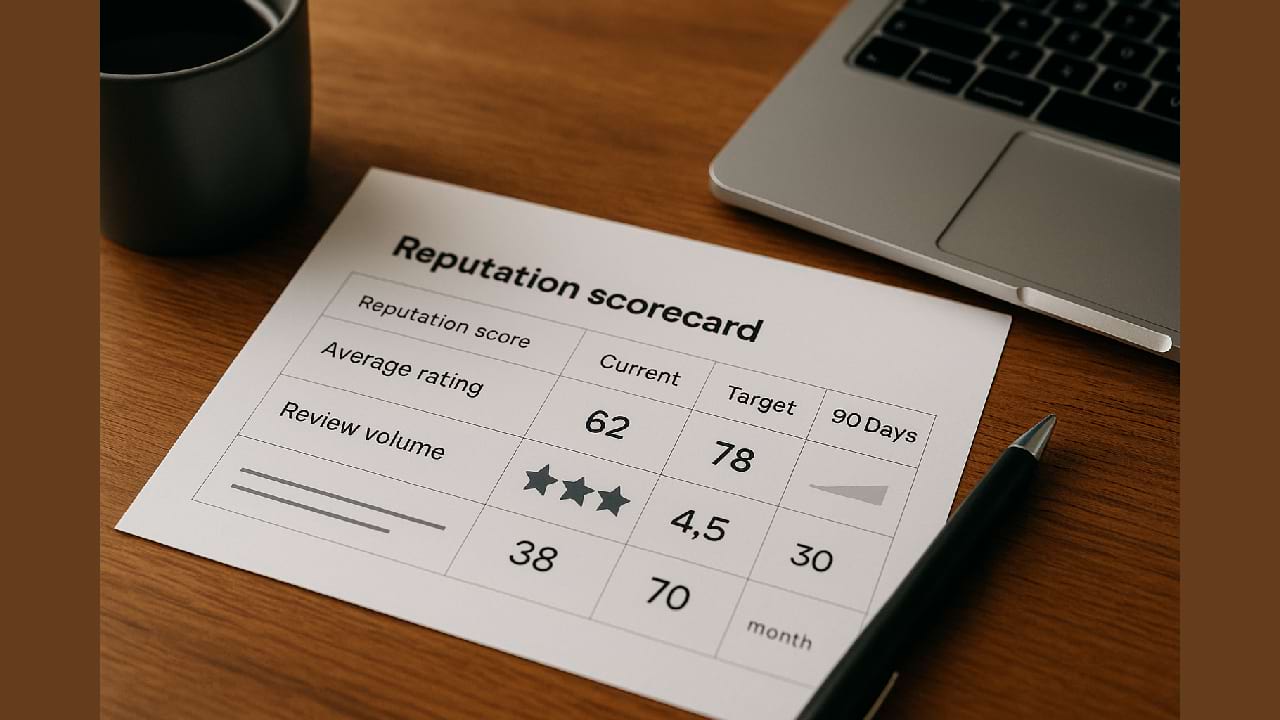
Bright Plumbing increased review volume by 48 percent in 60 days, moving their reputation score from 62 to 78. Organic website leads rose 34 percent, delivering an estimated 12 new projects and $78,000 in quarterly revenue.
Note: Prices are just examples and may not reflect actual costs.
Lakeside Dental focused on overall rating and response time. Their star rating climbed from 3.8 to 4.6, and first-page visibility improved for three high-value keywords. Patient bookings increased 27 percent, and lifetime patient value rose 15 percent.
Those companies acted on review data, responded to feedback, and used an AI-powered system to scale monitoring and engagement. You can replicate these steps without a large team or expensive software.
Understanding Reputation Signals
Reputation indicators are the various indicators that collectively shape how your brand is perceived online. These include star ratings, review volume, response rates, and listing accuracy across multiple platforms. Monitoring and optimizing these reputation indicators is essential for building customer trust, improving online visibility, and ultimately driving higher revenue. Strengthening your reputation at work and across digital platforms helps ensure your brand presents a consistent, trustworthy image to customers and partners alike.
Consequences of doing nothing and the numbers you will lose
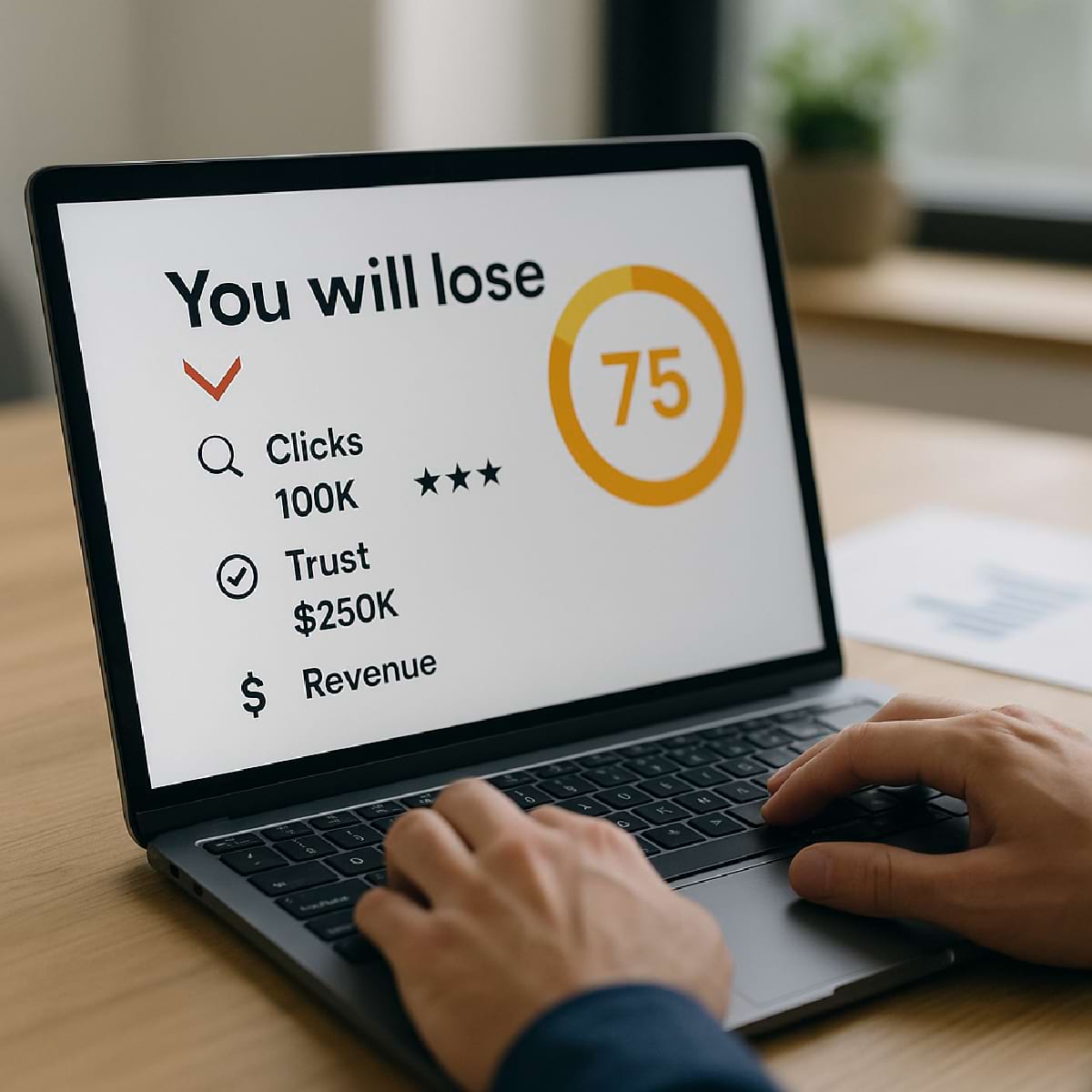
The cost of inaction isn’t hypothetical. If your reputation score lags competitors, you’ll lose search clicks, trust, and revenue. A conservative estimate: a 10-point lower score can reduce click-through by 15 percent and revenue by 5 to 12 percent annually. For a $5 million revenue company, that’s $250,000 to $600,000 lost each year.
Note: Prices are just examples and may not reflect actual costs.
Decision tension is simple. Teams that monitor and act on reviews achieve higher rankings, more positive feedback, and greater market share. Teams that delay hand those opportunities to competitors. That’s a missed opportunity to grow your business and improve your location’s performance.
Next steps after you book a call
Want to apply this without trial and error? Book a call, and we’ll run a quick diagnostic of trust signals, review the data, and assess the online presence. Expect a 30-minute audit, a clear scorecard showing where to focus, and a recommended 90-day plan that targets higher reputation scores and measurable revenue impact.
We reduce friction up front. You’ll get a prioritized action plan, templates for requesting positive feedback, scripts for responding to negative feedback, and metrics to track improvement. No heavy integrations or long contracts required to start seeing wins.
The data you can use today
Use these numbers to set KPIs, tie reputation management to revenue, and justify resources. Focus efforts on sites where consumers search and where competitors are weak.
Turn reviews into predictable revenue
Stop treating online reviews as something that happens to you and start treating them as a source of leads. Ready to stop guessing and start growing? Book a call to get a tailored reputation assessment that maps to revenue, search, and operations. Act now so your organization can raise its reputation scores, increase revenue, and uncover new opportunities while competitors lag. You can also learn more about what influences a reputation score and how businesses use it to improve customer experience and brand perception.
FAQs About Reputation Assessment & Scaling
Q1: Why does a reputation assessment beat single-metric reporting?
A reputation assessment aggregates multiple trust signals—such as star ratings, overall rating, review volume, and response rate—into one dashboard. This holistic view highlights brand health across platforms and reveals which factors most influence performance, making it far more actionable than tracking a single metric in isolation.
Q2: What is the timeline to see search and visibility gains?
Initial improvements can appear within 30 to 90 days, particularly when review volume and average ratings increase on key platforms. Search engines reward fresh feedback and active engagement, so consistent reputation management can gradually improve search placement and click-through rates.
Q3: Is reputation management only about positive reviews?
No. While positive reviews are important, comprehensive reputation management connects customer feedback to operational improvements, monitors brand mentions across channels, and tracks satisfaction metrics. Over time, this expands from review collection into monitoring, staff training, and long-term reputation strategy.
Q4: How should businesses handle fake reviews and platform compliance?
Fake reviews should be flagged through the platform’s official reporting process. Reputation monitoring tools can help identify suspicious patterns, while structured response templates ensure consistent, compliant communication that protects your brand and follows major platform guidelines.
Q5: How can a small team scale reputation management effectively?
Small teams can scale their efforts by using simple playbooks, automated review requests, and focusing first on the most influential platforms. By targeting high-impact actions—like improving response times and increasing review volume—teams can strengthen ratings and reputation with minimal resources while measuring real business impact.