- Effective methods for assessing a company’s reputation include online ratings, Better Business Bureau ratings, digital media presence, and financial track record.
- How to interpret various reputation signals to make informed decisions and avoid risky businesses.
- The importance of cross-checking multiple sources to build trust and ensure a company’s reliability before doing business.
How to Check a Company’s Reputation Before Hiring or Buying
Trust is a key factor when deciding to hire a company, buy from a brand, or form a partnership. Before signing a contract or making a purchase, conducting preliminary research on a business’s reputation helps you understand how it treats customers and handles problems. Today, information about a company is easier to find than ever. Online ratings, Better Business Network reports, press releases, and social media conversations provide valuable insights into a company’s credibility and brand perception. Learning how to evaluate these signals helps you avoid risky businesses and work with companies that consistently deliver quality service and build trust, which is why many organizations rely on business reputation management services to monitor, improve, and protect their public image.
Below are five practical methods for assessing a brand’s reputation and determining whether it deserves your confidence.
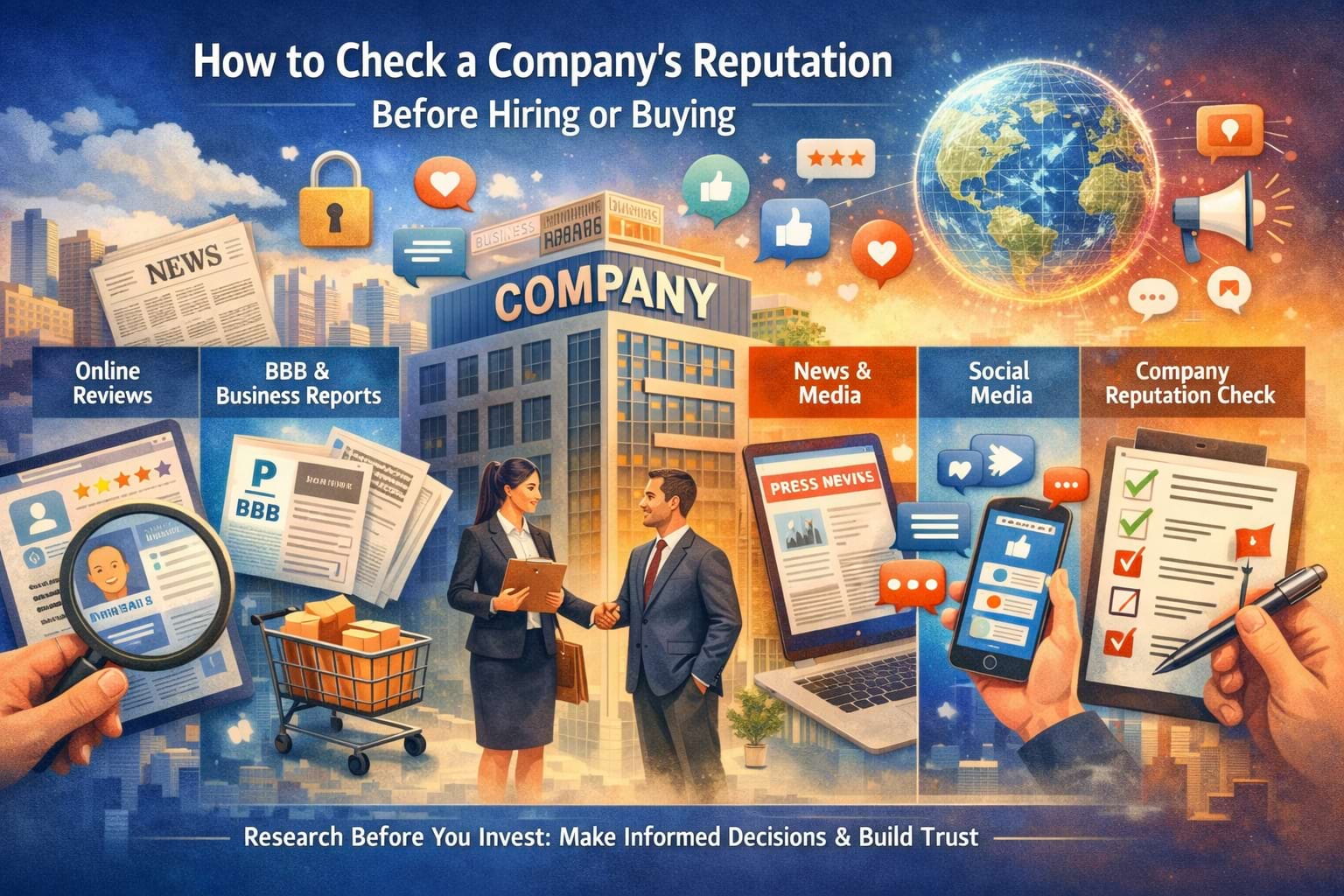
Check a Company’s Reputation Through Online Reviews
Online ratings are often the first step when evaluating a business. Platforms like Google Business Profiles, Yelp, Trustpilot, and industry forums allow users to share real experiences about service quality, responsiveness, and reliability. Businesses that apply proven strategies to increase online reviews and boost customer feedback can strengthen credibility and influence how potential customers perceive their brand.
When reading reviews, look beyond star ratings. The details reveal patterns about how the company operates.
What Online Reviews Reveal About Customer Experience and Reliability
A solid reputation usually shows several consistent signals:
- A steady stream of recent reviews
- A balanced mix of positive and constructive feedback
- Professional responses from the business to customer concerns
- Specific comments about service quality, timelines, and communication
For instance, if many customers mention delayed projects or poor communication, that pattern may indicate deeper operational issues. Conversely, companies praised for responsiveness and professionalism often demonstrate strong internal systems and customer support. Note that a high volume of recent positive reviews may sometimes indicate fake engagement, so look for authenticity. Reading reviews on these platforms also helps you gain insights into how the company handles negative reputation issues and whether it responds effectively to customer concerns—something often seen when analyzing bad brands and the mistakes that damage trust.
Better Business Bureau and Company Reputation
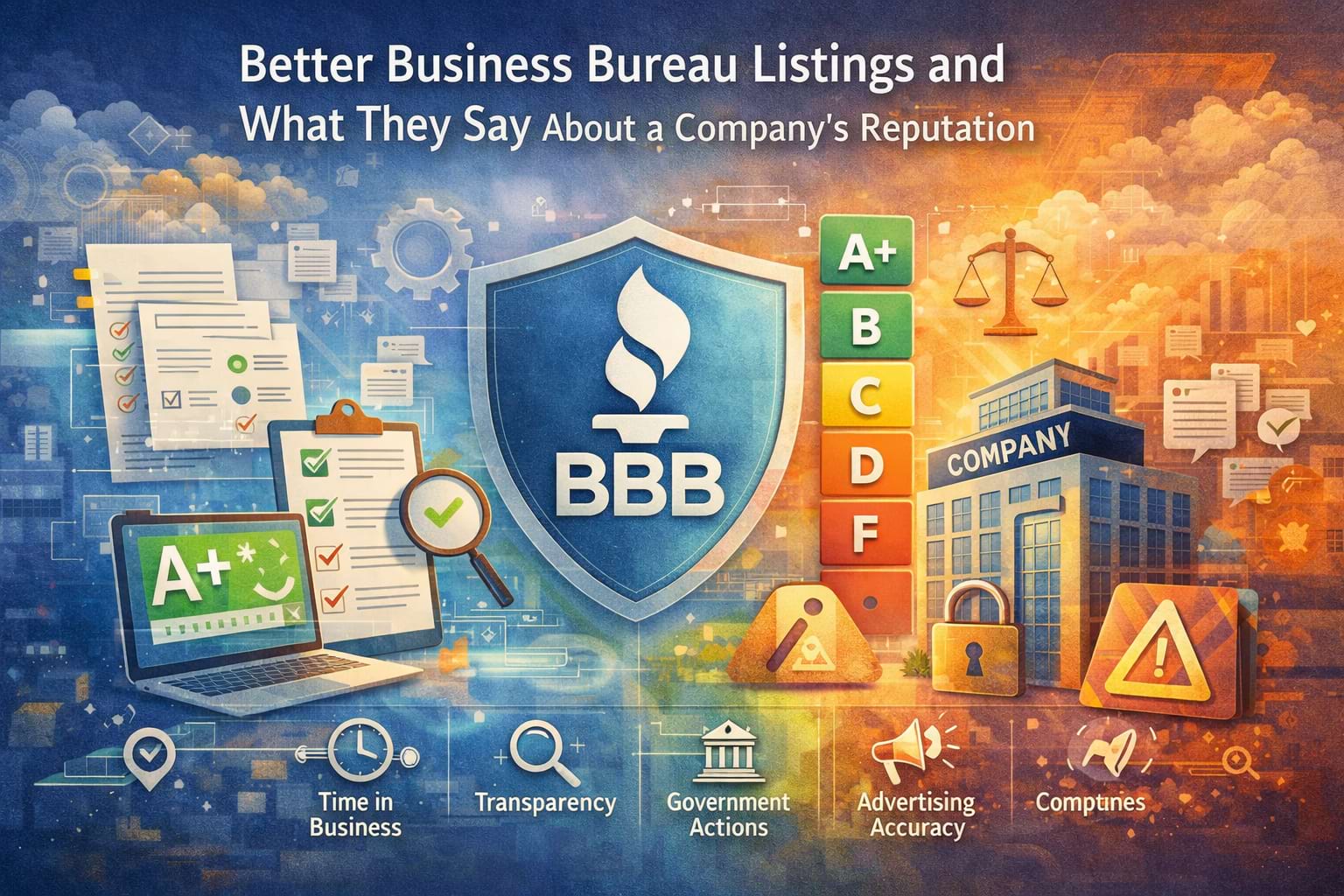
The Better Business Bureau (BBB) is a valuable resource for consumers seeking to validate the reputation of local businesses. A BBB profile provides structured information about a company’s history, complaint records, and responsiveness to issues.
How the Company Bureau Rating System Helps Identify Red Flags
The BBB rating ranges from A+ to F and evaluates businesses based on:
- Complaint resolution history
- Transparency of business practices
- Time in business
- Advertising accuracy
- Government actions against the company
For example, a company with an A rating and resolved complaints shows accountability, while unresolved complaints or an F rating may indicate poor customer service or a bad reputation. This contrast highlights the importance of maintaining a good reputation through consistent service quality and effective customer issue resolution.
Checking BBB ratings alongside online ratings provides a clearer picture of a company’s reputation and market visibility.
Evaluate a Company’s Social Media Presence for Reputation Signals
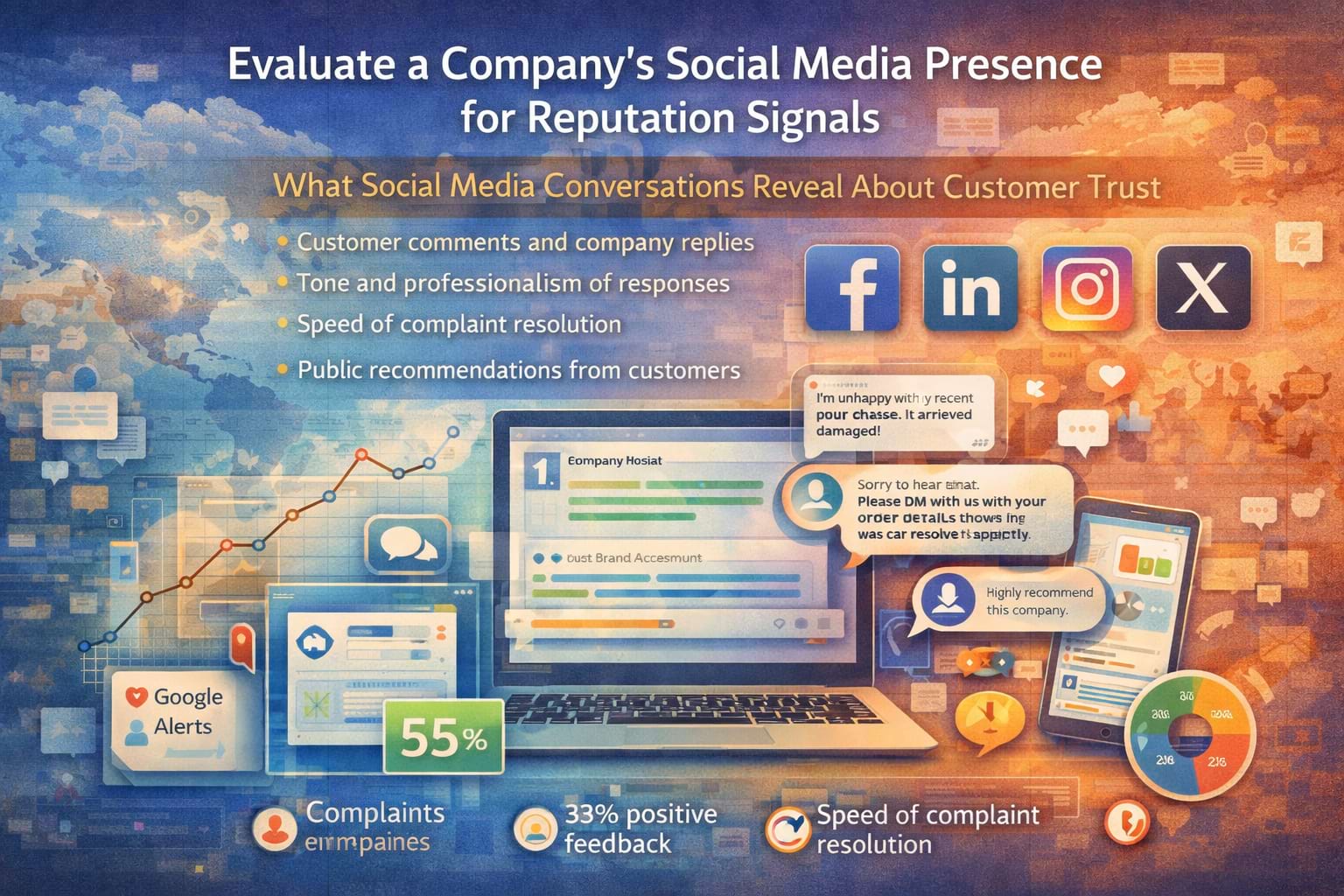
A company’s social media presence reflects how it interacts with customers in real time. Platforms such as Facebook, LinkedIn, Instagram, and X (formerly Twitter) reveal customer interactions and company responses, providing valuable insights into the business’s reputation. Using a reputation scorecard can help track these interactions and measure how effectively a brand engages with its audience across platforms.
What Social Media Conversations Reveal About Customer Trust
Look for signals such as:
- Customer comments and company replies
- Tone and professionalism of responses
- Speed of complaint resolution
- Public recommendations from customers
For example, frequent unresolved complaints without responses may signal poor customer service, while prompt, professional replies show strong brand accountability. Monitoring digital media platforms and using tools like Google Alerts can help track ongoing reputation signals and discussions that affect a company’s reputation.
 Analyze a Company’s Track Record and Complaint History
A company’s track record reveals whether it consistently delivers on promises. This involves reviewing multiple data points, including reviews, complaints, economic stability, industry recognition, and the business’s reputation. Evaluating metrics like a MyLife reputation score can also provide additional insight into how a business is perceived across third-party platforms.
How Past Business Practices Predict Future Customer Experiences
Key indicators include:
- Years in business and operational stability
- Patterns of recurring complaints
- Legal issues or regulatory violations
- Industry awards and certifications
For example, a company that has operated successfully for many years with mostly positive reviews likely has proven systems and a good reputation. However, frequent complaints about billing or unfinished work may indicate higher risks and a potential negative reputation. Economic stability is crucial; reviewing credit reports or publicly available filings provides insights into a company’s reliability as a business partner and its ability to maintain good standing with other stakeholders.
Build Trust by Verifying a Company’s Reputation Across Multiple Sources
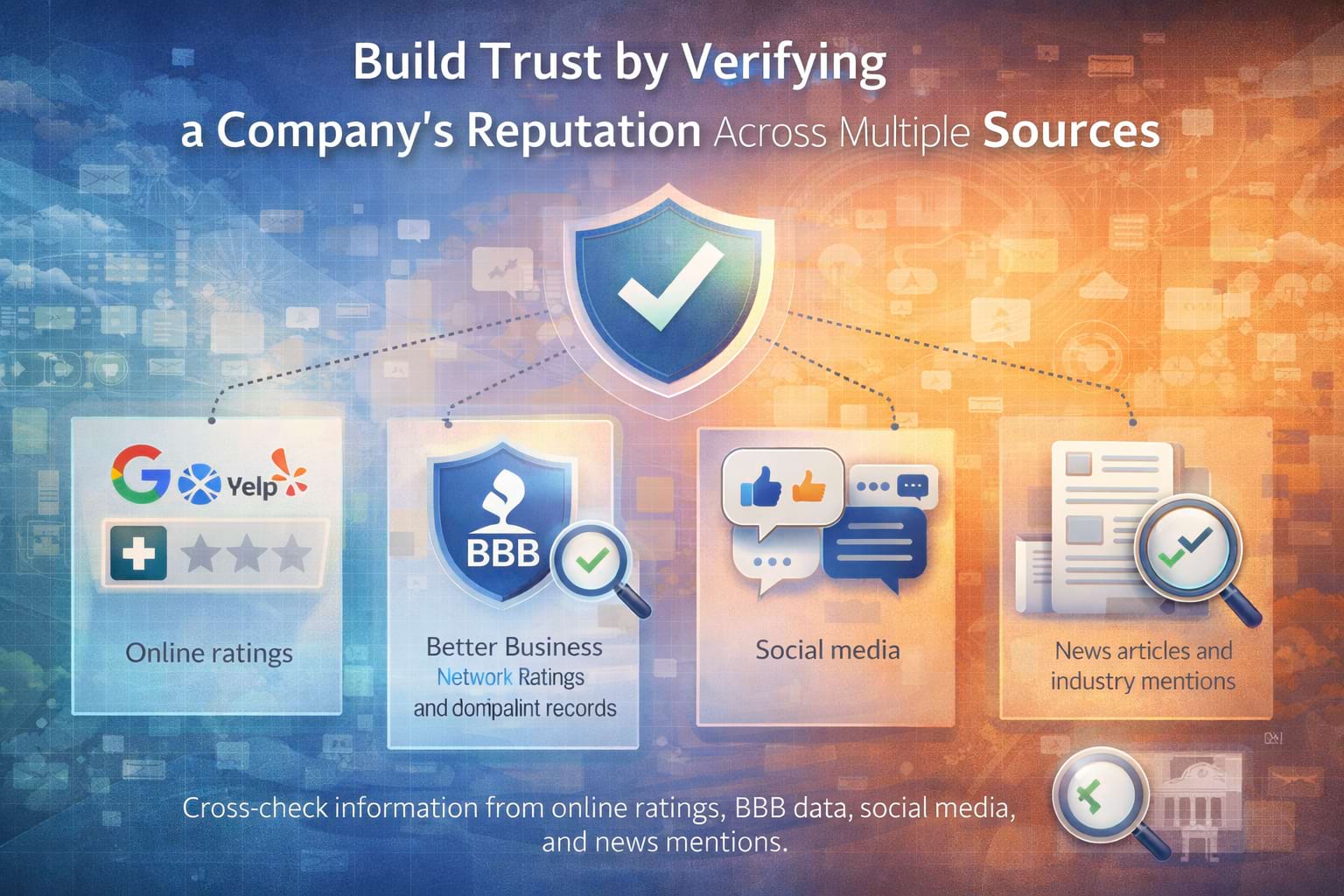
The most reliable way to evaluate a company’s reputation is to cross-check information from multiple sources. Relying on a single platform can create a distorted view of the business’s reputation.
Why Cross-Checking Reviews, Ratings, and Social Media Matters
Combine data from:
- Online ratings on Google, Yelp, and Trustpilot
- Better Business Network ratings and complaint records
- Social media conversations and engagement
- News articles, press releases, or industry mentions
For example, if a company has strong Google reviews but unresolved BBB complaints and negative social media feedback, mixed signals warrant deeper investigation. Conversely, consistent positive feedback across platforms usually demonstrates strong customer relationships and operational reliability. Additionally, verifying a company’s legal registration with authorities like the Secretary of State or Companies House confirms its active status and legitimacy. Industries like hospitality often rely on online reputation management for hotels to monitor feedback across multiple platforms and maintain consistent trust signals.
Performing a thorough search for negative news or indicators of a negative reputation across news outlets and social media can help uncover potential risks before engaging with a company. This comprehensive approach ensures you have a well-rounded understanding of the company’s trustworthiness and helps you avoid costly mistakes by making informed decisions based on multiple sources of information.
Final Thoughts on Evaluating a Company’s Reputation
Understanding how to check a company’s reputation protects you from costly mistakes and helps you make informed decisions. Online ratings provide firsthand customer experiences, while BBB reports add structured accountability. Social media conversations reveal real-time customer sentiment, and reviewing a company’s track record and economic stability creates a comprehensive view of its credibility. You can also follow official guidance on how to research any business before you buy to ensure a thorough and reliable evaluation process.
Before committing, take time to research these various aspects of reputation. A few minutes of investigation can reveal valuable insights and help you choose businesses that consistently deliver trust, quality, and professionalism. In today’s digital marketplace, a company’s reputation is publicly documented, and learning how to interpret those signals is a crucial step toward business success.
FAQs About Checking a Company’s Reputation
Q1: How do I effectively check a company’s reputation?
Start by reviewing ratings on platforms like Google, Yelp, and Trustpilot. Check Better Business Bureau (BBB) ratings for complaint history and resolution. Analyze the company’s social media presence for engagement and responsiveness. Also verify their track record by reviewing years in business, certifications, legal history, and overall stability. Cross-checking multiple sources provides the most accurate picture.
Q2: Why is a company’s reputation important before doing business?
A company’s reputation reflects its reliability, professionalism, and trustworthiness. A strong reputation attracts customers, partners, and employees, while a poor one increases risk and can lead to costly mistakes. Evaluating reputation helps you make more informed and safer decisions.
Q3: What should I look for in online reviews?
Focus on consistency and recency. Look for a steady stream of recent reviews, a natural mix of positive and critical feedback, and professional responses from the business. Repeated complaints—such as delays or poor communication—often indicate deeper operational issues.
Q4: How can digital media platforms help in checking reputation?
Social media provides real-time insight into how a company interacts with customers. Active engagement, quick responses, and positive conversations signal transparency and strong service. Ignored complaints or ongoing negative sentiment can be warning signs.
Q5: What does a Better Business Bureau (BBB) rating tell me?
The BBB rating reflects factors such as complaint resolution, transparency, time in business, and advertising practices. A high rating with resolved complaints suggests accountability, while unresolved issues or a low rating may indicate potential problems.
Q6: Can a company’s website provide insights into its reputation?
Yes. A professional website typically includes company history, mission, services, and testimonials. However, missing contact details, vague information, or poor-quality content can be red flags regarding credibility or legitimacy.
Q7: How important is a company’s financial stability in reputation?
Financial stability is a key indicator of reliability. A stable company is more likely to meet obligations and maintain operations long-term. Reviewing financial data, when available, can provide additional confidence in a potential partner.
Q8: Should I consider employee reviews when checking reputation?
Yes. Employee feedback on platforms like Glassdoor can reveal insights into company culture, leadership, and internal stability. These factors often influence service quality and long-term performance.
Q9: How do I handle mixed signals about a company’s reputation?
If you encounter conflicting information, dig deeper. Look for patterns over time, consult multiple sources, and consider reaching out to past clients or references. A balanced, data-driven approach helps clarify the true reputation.
Q10: Are industry awards and certifications important?
Yes. Awards and certifications signal that a company meets recognized standards of quality and professionalism. They also indicate respect within the industry and can strengthen confidence in your decision.